


A low quote on a hydraulic press can look like a win on paper. But the sticker figure is only one line item in a longer story. Buyers who focus only on the initial hydraulic press cost often discover, months later, that the machine they chose is costing far more than the one they passed over. The real price of a press shows up in downtime, scrap, safety incidents, tooling headaches, and maintenance bills that never appear on the original invoice.
Why Upfront Hydraulic Press Cost Isn't the Whole Story
Every press buyer has a budget, and every budget has a ceiling. That’s reasonable. What’s less reasonable is treating hydraulic press cost as the single deciding factor without asking what that number actually includes. A cheaper frame might mean lighter steel, fewer control options, or a bare-bones hydraulic system that can’t handle the tonnage swings your parts actually demand.
Beckwood builds both standard and fully custom hydraulic presses, and the difference in long-term value between the two paths often has nothing to do with the price tag. A standard press configured for your tonnage, stroke, and bed size can be the smarter buy. A custom press engineered around a specific part geometry or forming process, such as hot forming or superplastic forming, can eliminate rework and secondary steps that quietly drain a shop’s budget for years. The lowest hydraulic press cost on the quote sheet rarely reflects what the machine will actually cost you to run.
Ready to see what the right hydraulic press can save you?
Let Beckwood help you find the fit.
How Press Downtime Costs Add Up Fast
Nothing erodes a press buyer’s confidence faster than an unplanned stoppage on a production deadline. Press downtime costs stack up fast: idle labor, missed shipping windows, rush freight on replacement parts, and delays for downstream work centers waiting on that formed part.
A press built with undersized components or a control system that wasn’t matched to the application is far more likely to fail under real production loads. Press downtime costs compound when a shop has no local support and has to wait days for a technician or a part. Beckwood’s engineering team works directly with buyers before a build begins to size the hydraulics, structure, and controls to the actual job, not a generic spec sheet, which is exactly the kind of upfront planning that keeps a press running when it matters most.
Production Fit: Matching the Press to the Part, Not the Other Way Around
A press that isn’t matched to the part it’s forming will fight the process at every step. Tonnage that’s too low forces multiple hits and inconsistent parts. Tonnage that’s too high wastes energy and floor space. Bed size, daylight, and stroke length all need to match the actual tooling and material, not a rough estimate.
This is where custom engineering earns its keep. Beckwood works with buyers to define press parameters around the part itself, whether that’s a deep draw, a hot forming cycle, or a superplastic forming application that needs tightly controlled heat and pressure. A press sized correctly the first time avoids the slow, expensive process of retrofitting a machine that was never right for the job.
Tooling Compatibility Problems That Drain Budgets
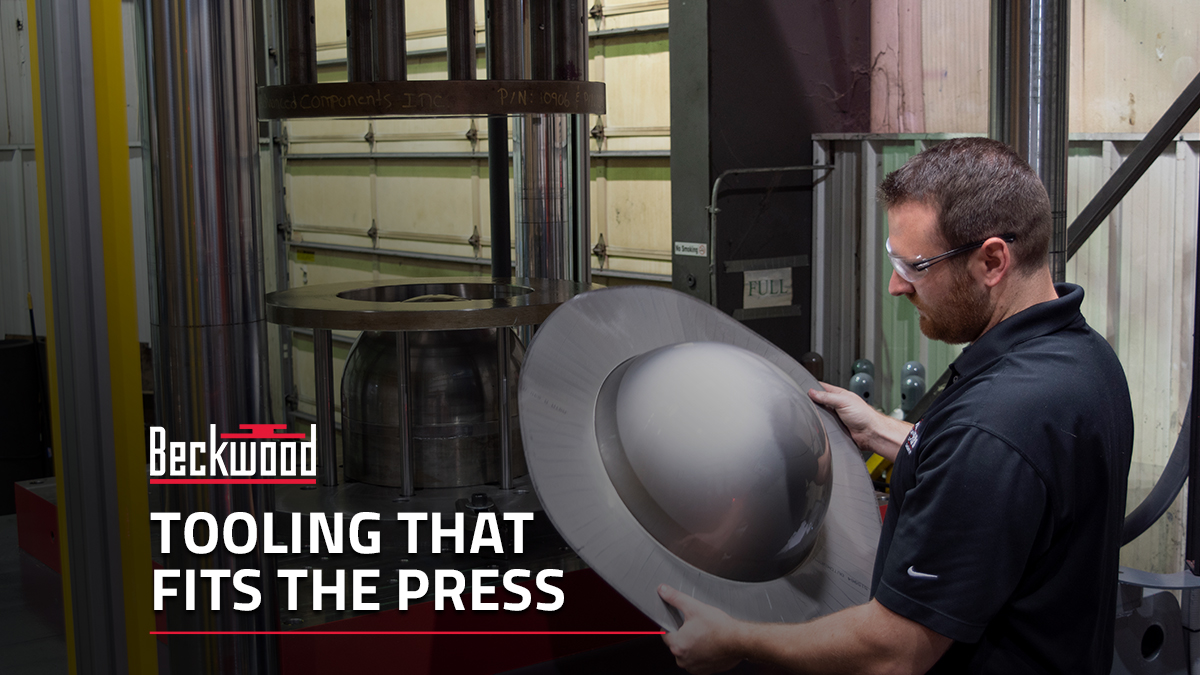
Tooling compatibility is one of the most overlooked line items in a press purchase. A press that can’t accommodate existing dies, or that requires custom adapters and modified tooling to function, adds cost before a single part is produced. Buyers who skip this step often find themselves paying for tooling changes that could have been avoided with the right press configuration from the start.
Beckwood designs presses with bolster patterns, daylight, and stroke that align with the tooling a shop already owns or plans to use, reducing the need for costly workarounds. Getting this right up front protects both the tooling investment and the schedule.
Have a forming challenge that off-the-shelf presses can't handle?
Beckwood builds custom.
Safety Shortcuts That Cost More Than They Save
A press with outdated guarding, weak light curtains, or a control system below current safety standards is a liability that eventually comes due. Incident-related shutdowns, workers’ compensation claims, and regulatory fines can dwarf the price gap between a properly equipped press and a stripped-down one.
Beckwood builds safety into the press rather than treating it as an add-on, with guarding, interlocks, and controls designed around the application from the beginning. A safe press protects people first, but it also protects the schedule, since a safety incident almost always means an extended, unplanned stoppage.
Maintenance Demands You Didn't Budget For
Every hydraulic press needs upkeep, but not every press needs the same level of it. A press built with hard-to-source components, proprietary parts, or a design that makes routine service difficult will cost more in labor and parts over its lifespan than one built for straightforward maintenance access.
Beckwood designs presses with service access and common, available components in mind, so routine maintenance doesn’t turn into a multi-day project. A press that’s easy to maintain stays in production longer and keeps hydraulic press cost predictable well past the initial purchase.
Calculating True Hydraulic Press ROI
Hydraulic press ROI has to account for more than the purchase price divided by expected output. A full picture includes uptime, part quality, scrap rate, energy use, tooling life, labor efficiency, and the resale or reconfiguration value of the press down the line. A press that costs more upfront but runs reliably, forms parts correctly the first time, and adapts to future jobs will typically deliver stronger hydraulic press ROI than a cheaper machine that needs constant attention.
Buyers who model hydraulic press ROI over a five or ten year window tend to land on a very different machine than buyers looking only at the invoice total. Beckwood works with customers to think through that longer timeline before a build starts, so the press purchased today still makes sense years from now.
Choosing a Press Built Around Your Application
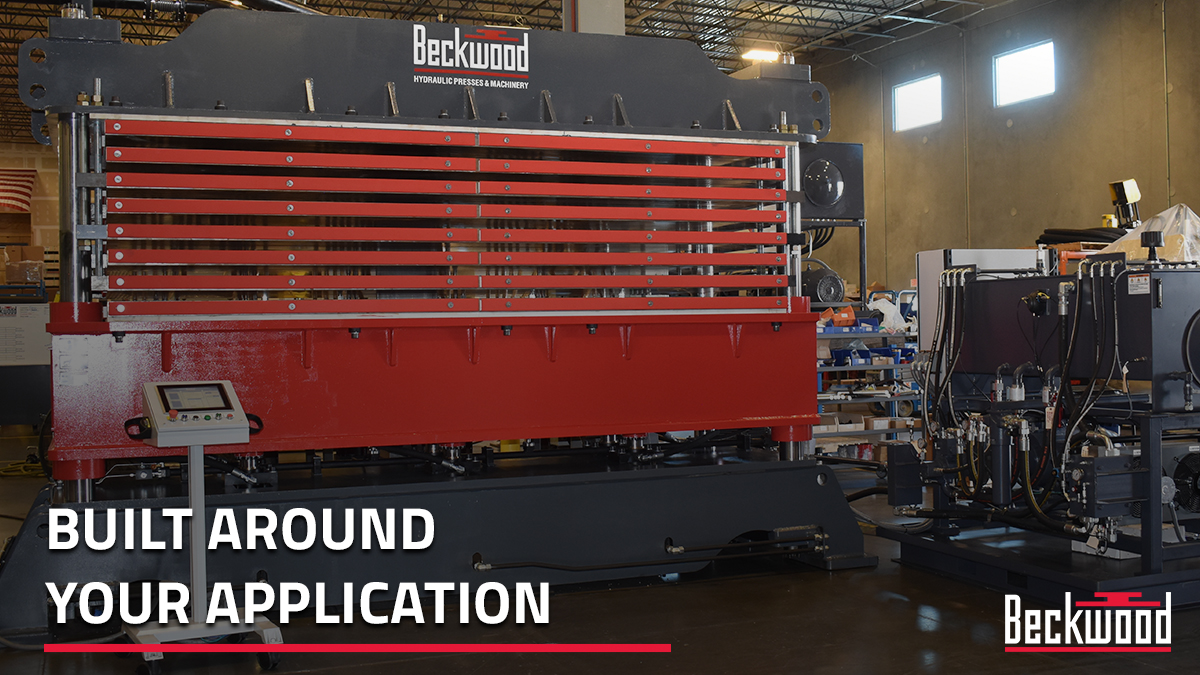
The cheapest press on the table is rarely the cheapest press to own. Hydraulic press cost, press downtime costs, and hydraulic press ROI are all connected, and the connections only become obvious after the machine is already on the floor. Buyers who ask hard questions about tonnage, tooling fit, safety, and maintenance before signing a purchase order avoid the surprises that show up later.
Beckwood Press has spent decades building standard and custom hydraulic presses for manufacturers who need a machine that fits the job, not just the budget. From hot forming to superplastic forming to general fabrication, the goal is a press that keeps production moving and keeps costs where buyers expect them to be, long after the purchase decision is made.
Wondering what a properly engineered press could do for
your bottom line? Contact us today.
FAQ
What factors affect the true cost of a hydraulic press?
Compression molding presses are extremely versatile tools which utilize heated and/or cooled platens to achieve a desired forming temperature profile. We can manufacture single or multicavity custom compression molding presses for:
- Thermoplastic forming or stamping
- Injection Molding
- Composite Forming
- Extrusion Forming
- Reaction Injection Molding
- Powder Compacting
- HDPE Sheet Making
- UHMW Sheet Making
Is a cheaper hydraulic press actually more expensive to own?
During the hot forming process, both the tool and blank achieve a preheat temperature up to 2,000°F to increase the plasticity and elongation characteristics of the material. The introduction of heat allows for the formation of high-strength materials at significantly lower tonnages when compared to cold forming without the risk of cracking, spring-back, or residual stress.
SPF uses extreme temperatures in conjunction with argon gas to form high-strength alloys into complex shapes in a single step. During an SPF cycle, preheated blank sheet metal material is clamped between a die and a plate. Argon gas, injected through the die into the forming chamber, pushes the blank into the die. The resulting parts have a fine surface finish and are near-net-shape, eliminating the need for secondary finishing.
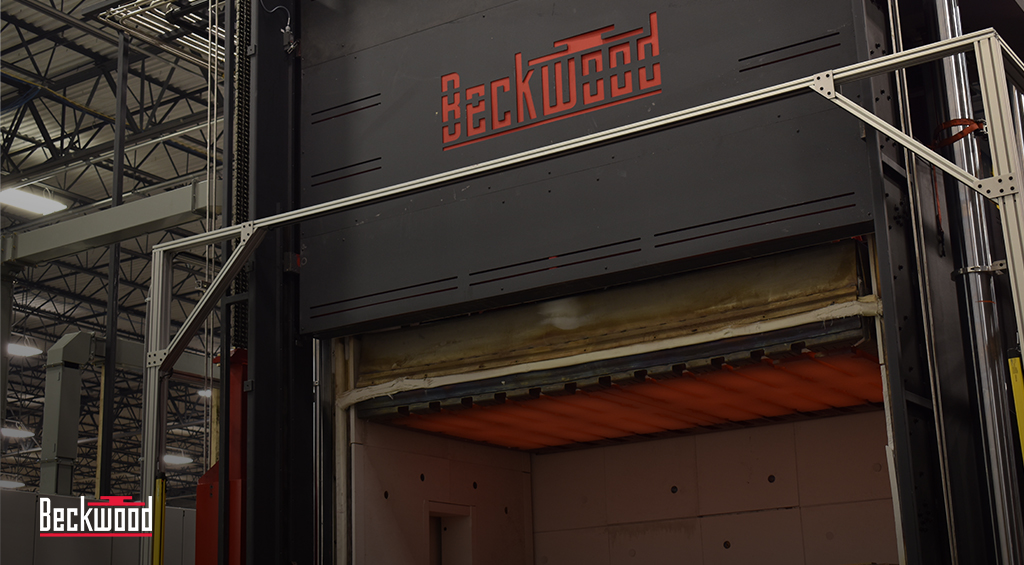
Beckwood hot forming and SPF presses provide ultimate precision, optimal temperature control and uniformity, and extreme process repeatability that is critical to success in aerospace manufacturing. Platens can be fabricated from ceramics, stainless materials, or other exotic metal alloys depending on the specific application requirements. Automated insulated door systems can be provided to efficiently contain the heat within the forming chamber, while also allowing adequate access during part or tool loading and unloading sequences.
Our hot forming and SPF presses are both available with hydraulic or servo-actuated options. Beckwood is currently the only manufacturer to offer servo-actuated hot forming presses.
How do press downtime costs impact production?
High precision, uptime, reliability, and unmatched forming flexibility are pillars of this world-class press technology. The use of a servo motor and linear motion system allows for greater control over the pressing process, including the ability to generate force throughout the entirety of the stroke. This makes linear servo presses ideal for stamping of high-strength sheet metals, complex draw forming, progressive die forming, assembly, and any application that requires high-precision and/or accuracy. With options for tonnage, frame type, dwell time, heated platens, safety features, and more, these machines can be configured to suit your aerospace manufacturing needs.
How do you calculate hydraulic press ROI?
With both lines you can easily program ram position, force targets, and speeds for maximum productivity. The key difference between the EVOx™ and LSP lines are their positional accuracy and max tonnage capacity.
With presses ranging from 125 – 500 tons, Beckwood LSP™ offers the highest tonnage capacity of any linear servo press available.
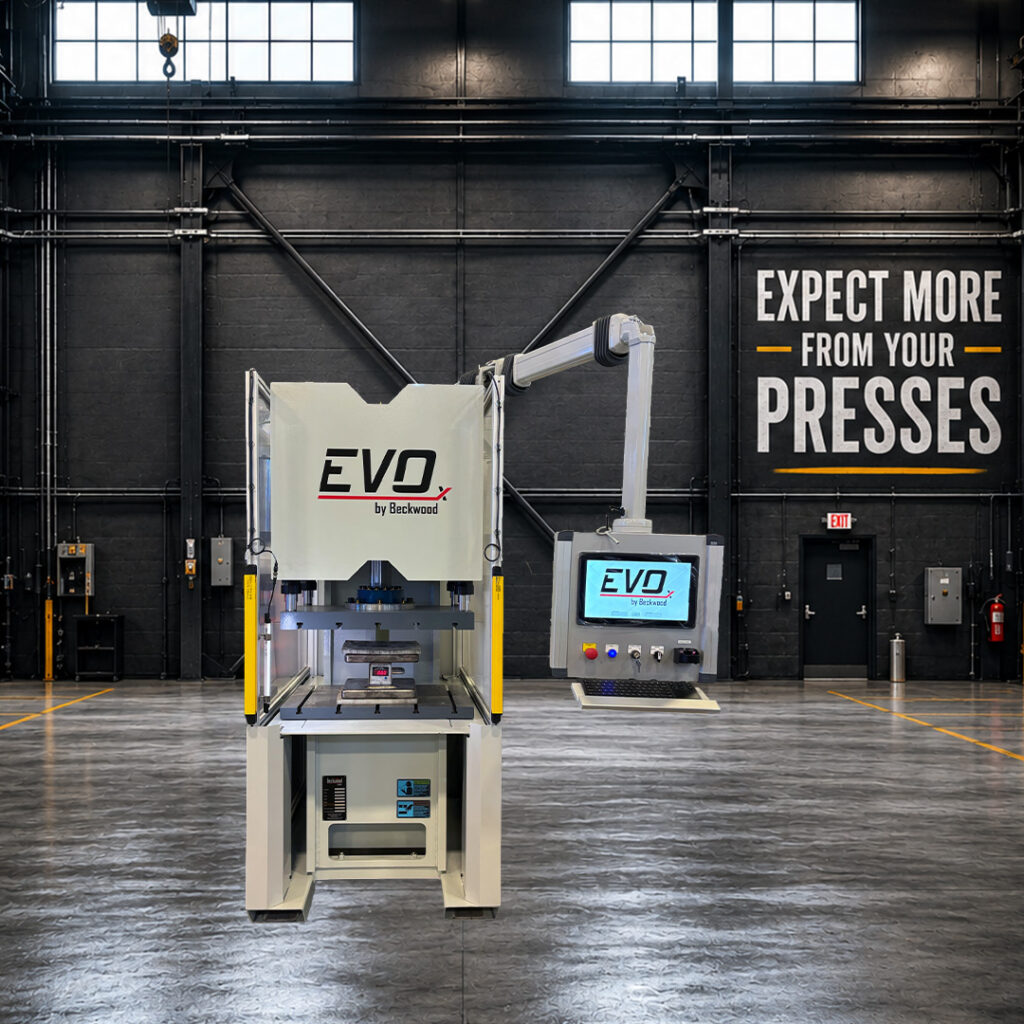
For low-tonnage part forming and assembly operations, our line of EVOx™ servo-electric presses is right for the job. The EVOx™ is available in a tonnage as low as 2.5 tons, up to as high as 100 tons. Positional repeatability to within ±0.0005″ is made easy with this machine designed for high accuracy and high precision.
When should you choose a custom hydraulic press over a standard model?
Our versatile TRIFORM™ equipment can be used to create near-net aerospace parts and space equipment like fuselage panels, fuel tanks, engine components, and more in just a single operation. Across the board, these presses are proven to improve part quality, minimize defects and scrap rates, reduce production steps, and ultimately streamline production. Our TRIFORM™ line includes:
- Sheet Hydroforming Presses
- Deep Draw Hydroforming Equipment
- Ring Expanders
- Stretch Forming Equipment