
Reaction Injection Molding (RIM)
Home / Press Applications / Injection Molding / RIM
Custom Press Configurations For Injection Molding Processes
Reaction Injection Molding (RIM) is a molding process used to manufacture large, thick, or complex parts by injecting low-viscosity liquid resins into a closed mold, where they chemically react and cure. In RIM applications, the press functions primarily as a precision clamping system, maintaining mold alignment, controlled motion, and repeatable cycle sequencing while the resin cures. Because RIM typically involves large tooling, lower clamp tonnage, and longer cycle times, standard injection molding machines are often not well suited. RIM press systems are commonly used in energy, aerospace, defense, transportation, and industrial applications where part size, orientation, or process flexibility drive the need for custom equipment.
Custom RIM Press Engineering & Design
RIM press design is driven by mold size, clamping force requirements, resin flow behavior, and process sequencing. These considerations influence press architecture, platen design, motion features, and controls integration.
Press Role in the RIM Process
In RIM applications, the press does not perform material injection. Instead, it provides precise clamping force, platen alignment, controlled opening and closing, and repeatable sequencing while interfacing with an external resin metering and injection system. Clear definition of press responsibilities versus injection system responsibilities is critical to successful system integration.
Mold Size, Weight & Clamping Force
RIM molds are often large and heavy, requiring presses with generous daylight, robust platen support, and rigid frames to maintain alignment. Required clamping force is typically lower than traditional injection molding but must be applied consistently to prevent flash and ensure part quality.
Part Orientation, Tilt & Rotation
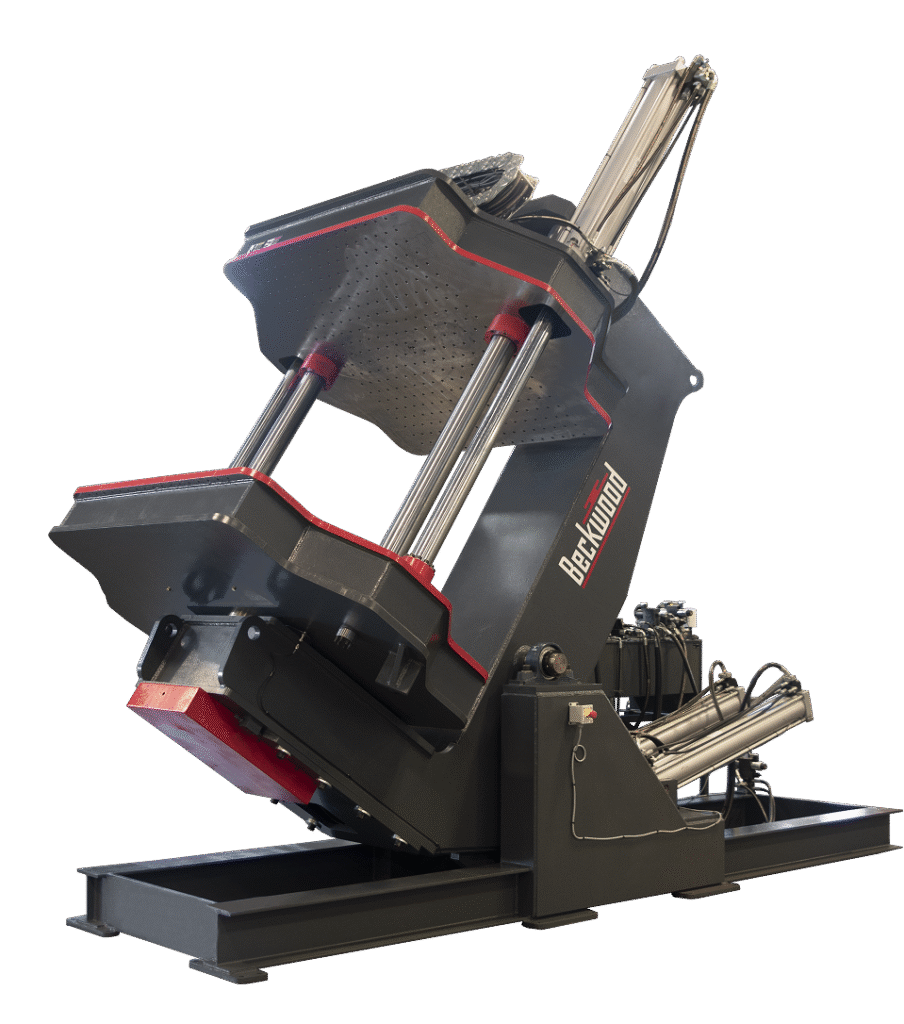
Many RIM processes benefit from tilting or rotating the mold during or after resin injection to improve material distribution, reduce air entrapment, and ensure uniform coating. Press systems may incorporate tilt, swivel, or rotating bases to support these process requirements.
Cure Time, Dwell & Thermal Control
RIM cycles often include extended dwell times while the resin cures. Heated platens, mold temperature control, and stable clamp force throughout the dwell period are critical to repeatable results and dimensional consistency.
Controls Integration & Sequencing
RIM systems require coordinated sequencing between the press and external resin metering equipment. Controls must manage clamp motion, dwell timing, tilt sequences, and interlocks while communicating with the injection system to ensure safe, repeatable operation.
Access, Ergonomics & Safety
Large molds, tilt features, and longer cycle times require careful consideration of operator access, guarding, and maintenance ergonomics. Press design must support safe operation and efficient mold service.
Beckwood RIM Press Solutions
Beckwood engineers and manufactures custom hydraulic and servo-electric press systems designed specifically to support Reaction Injection Molding processes where standard molding machines are not a fit.

Custom RIM Clamping Presses
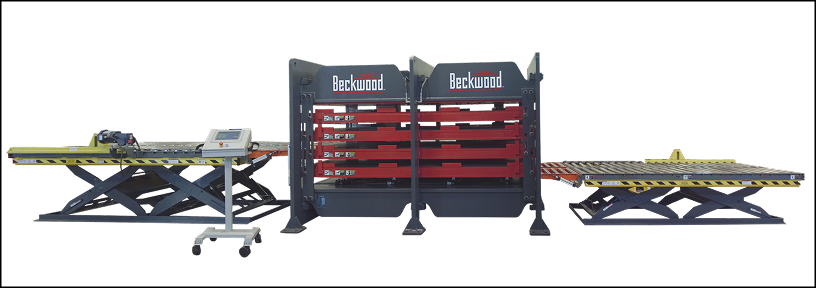
Beckwood RIM presses are engineered to provide stable, repeatable clamping force with rigid platen alignment for large or non-standard molds. Each system is designed around the mold size, cure time, and production objectives of the application.

Tilt, Swivel & Rotating Press Configurations
Custom press architectures can incorporate tilt, swivel, or rotating bases to support gravity-assisted resin flow, even material distribution, and improved part quality in RIM applications.

Integration with Resin Metering & Injection Systems
Beckwood presses are designed to interface seamlessly with customer-selected RIM metering and injection equipment. Press controls support sequencing, communication, and safety interlocks without duplicating injection system functionality.

Advanced Controls & Recipe-Based Operation
Programmable controls support clamp force management, platen motion, dwell timing, tilt sequences, and coordinated operation with external resin systems. Recipe functionality improves repeatability and simplifies changeover.

Heated Platens & Thermal Zoning
Multi-zone heated platens can be provided to support mold temperature requirements and improve cure consistency across large or complex tooling.
Reaction Injection Molding FAQ
What role does the press play in a RIM system?
In RIM applications, the press acts as a precision clamping and motion system, holding the mold closed, controlling orientation, and sequencing the process while the resin cures.
Does Beckwood supply the resin injection or metering system?
Beckwood typically does not supply the resin metering or injection equipment. Instead, Beckwood designs the press and controls to integrate with customer-selected RIM injection systems.
Why are custom presses often used for RIM?
RIM applications frequently involve large molds, tilt or rotation requirements, and long dwell times that exceed the capabilities of standard injection molding machines.
What industries commonly use RIM press systems?
Beckwood RIM press systems are used in energy, aerospace, defense, transportation, and industrial manufacturing applications.
Can Beckwood customize a RIM press for my application?
Yes. Beckwood specializes in custom-engineered RIM press solutions tailored to mold size, part geometry, process sequencing, and facility constraints.