

Manufacturers evaluating a forming system begin with the question: should they invest in a custom hydraulic press or move forward with a standard platform? The answer depends on production goals, tooling requirements, part geometry, delivery timelines, and expansion plans. While bespoke engineering remains the right path for highly specialized applications, many projects gain value from standardized systems that combine architecture with configurable features.
We address both paths through custom engineering capabilities and through product families such as EVOx and Ascent. Each approach serves a manufacturing need, yet there are many situations where a standard platform provides the practical route from specification to production.
Understanding the Difference Between Standard and Custom Systems
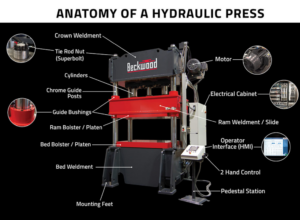
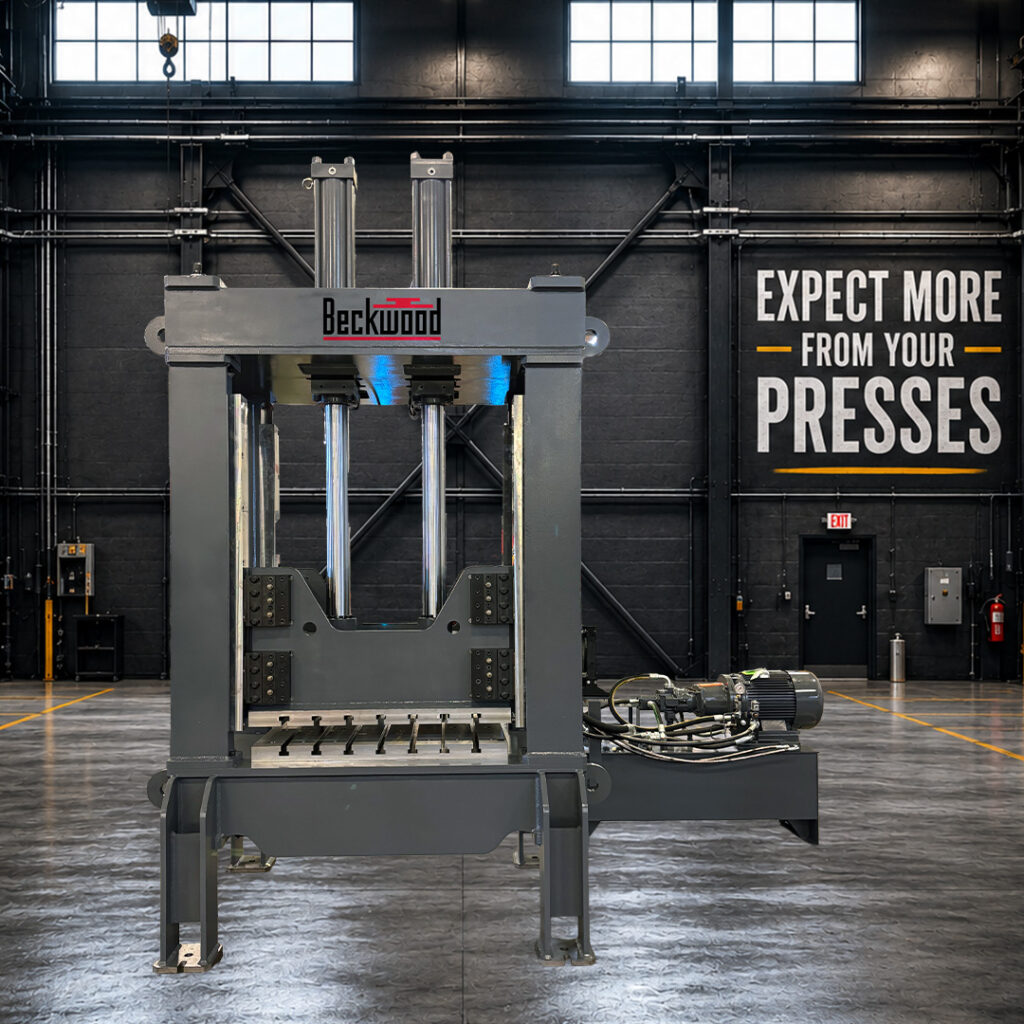
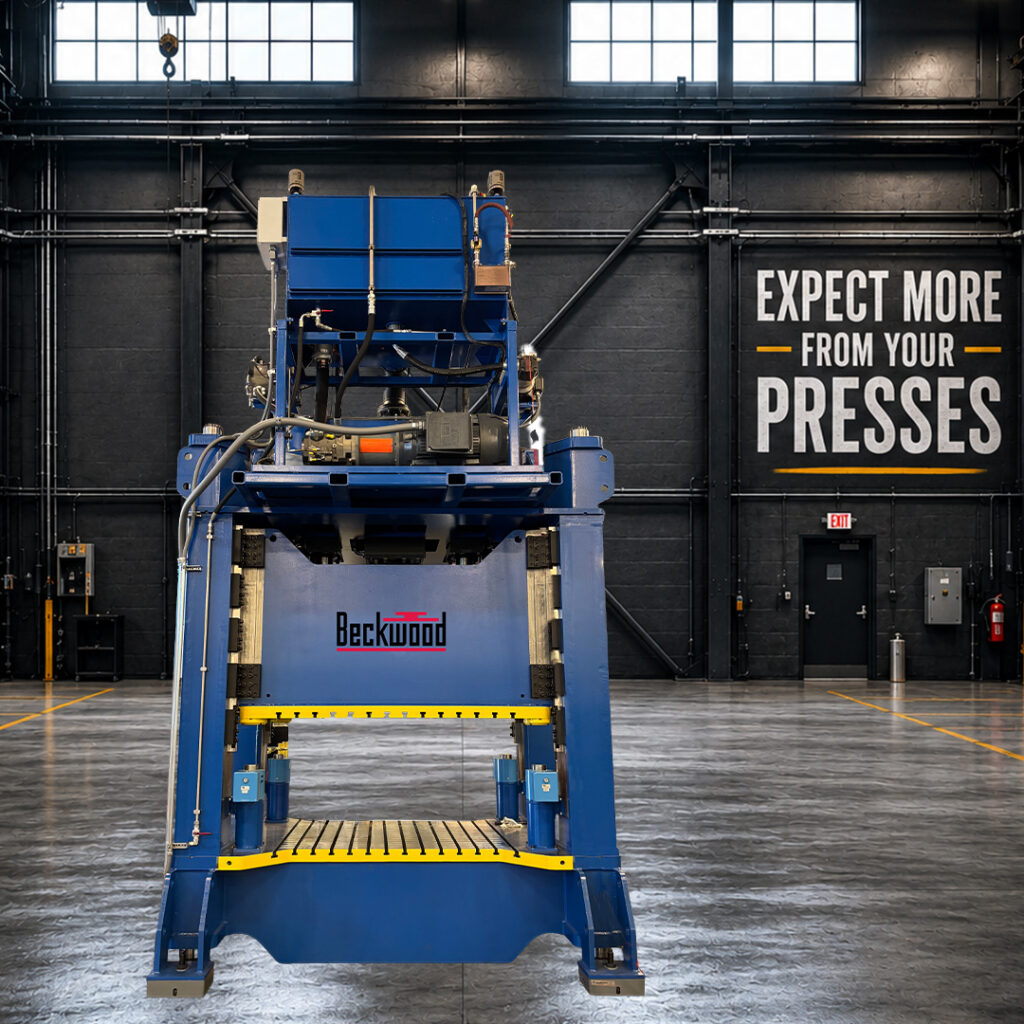
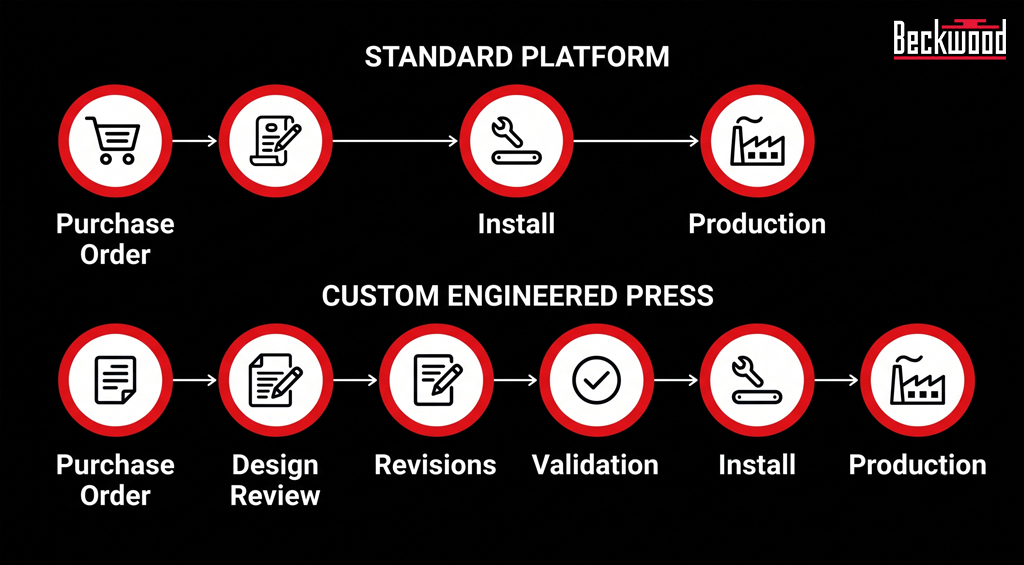
A custom hydraulic press is engineered around highly specific manufacturing parameters. Frame dimensions, daylight openings, tonnage ratings, automation packages, safety systems, and tooling interfaces are developed for a single application or product family. This route gives manufacturers extensive design flexibility but often involves longer engineering schedules, more design reviews, and additional validation phases before installation.
Standard platforms take a different approach. Instead of starting from scratch, manufacturers select from established configurations with proven mechanical layouts and tested control architectures. This reduces engineering complexity while still allowing practical modifications to meet production targets.
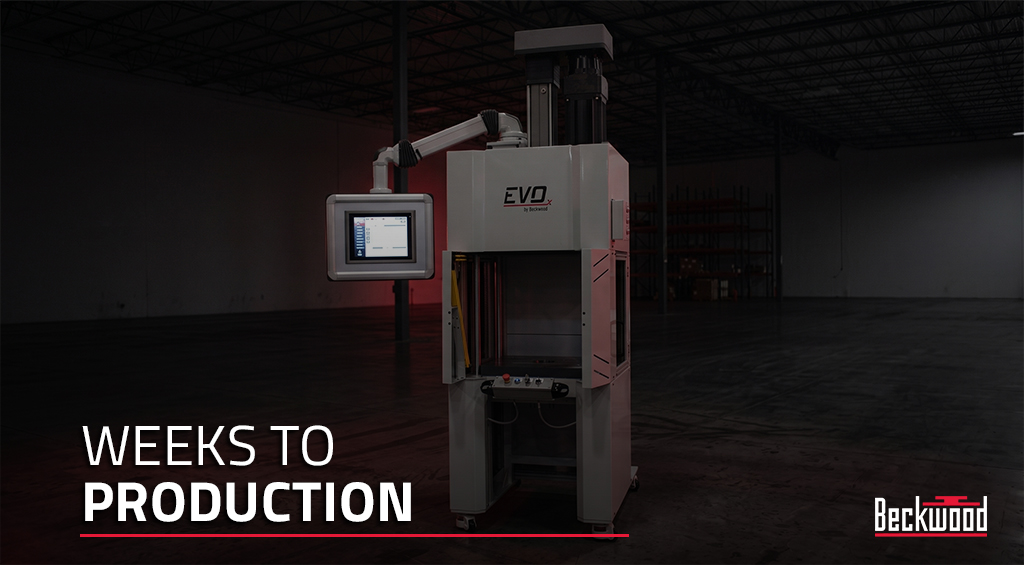
Beckwood’s EVOx and Ascent product lines were created around this philosophy, providing manufacturers with fast access to industrial press technology without waiting for a ground-up design cycle.
When Delivery Speed Carries Greater Weight Than Customization
One of the advantages of standardized equipment appears when project schedules are compressed. Product launches, new contracts, and shifting market demand can create immediate capacity requirements that leave little room for lengthy engineering programs.
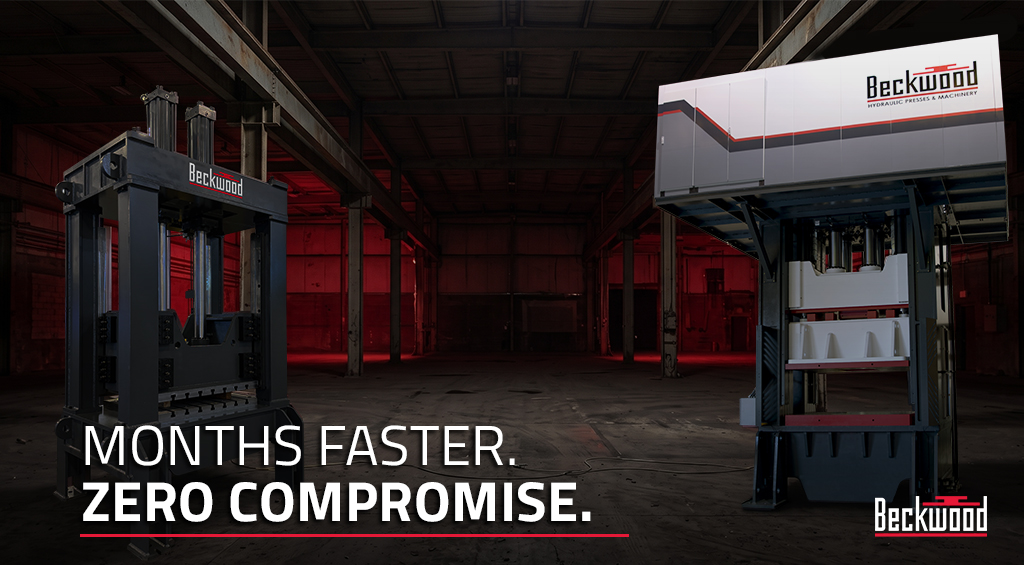
The Ascent Fast Lane Program was developed specifically for these situations. By using predefined hydraulic press options and established manufacturing processes, Beckwood can dramatically shorten lead times compared with fully engineered equipment programs.
Manufacturers in automotive, aerospace, appliance, and industrial sectors often view time-to-production as a competitive factor rather than a convenience. A press that arrives months earlier may support new revenue opportunities or reduce outsourcing costs while competitors continue waiting for equipment deliveries.
In these scenarios, the availability of a standardized platform frequently outweighs the advantages associated with deeper customization.
Ready to experience ingenuity unleashed?
Find out what we can do for your next manufacturing project.
When Process Requirements Already Match Existing Architectures
Many production applications do not require unusual tonnage curves, uncommon bed dimensions, or highly specialized motion profiles. Stamping, forming, assembly, trimming, and compression processes frequently align with press designs that already exist within standard product families.
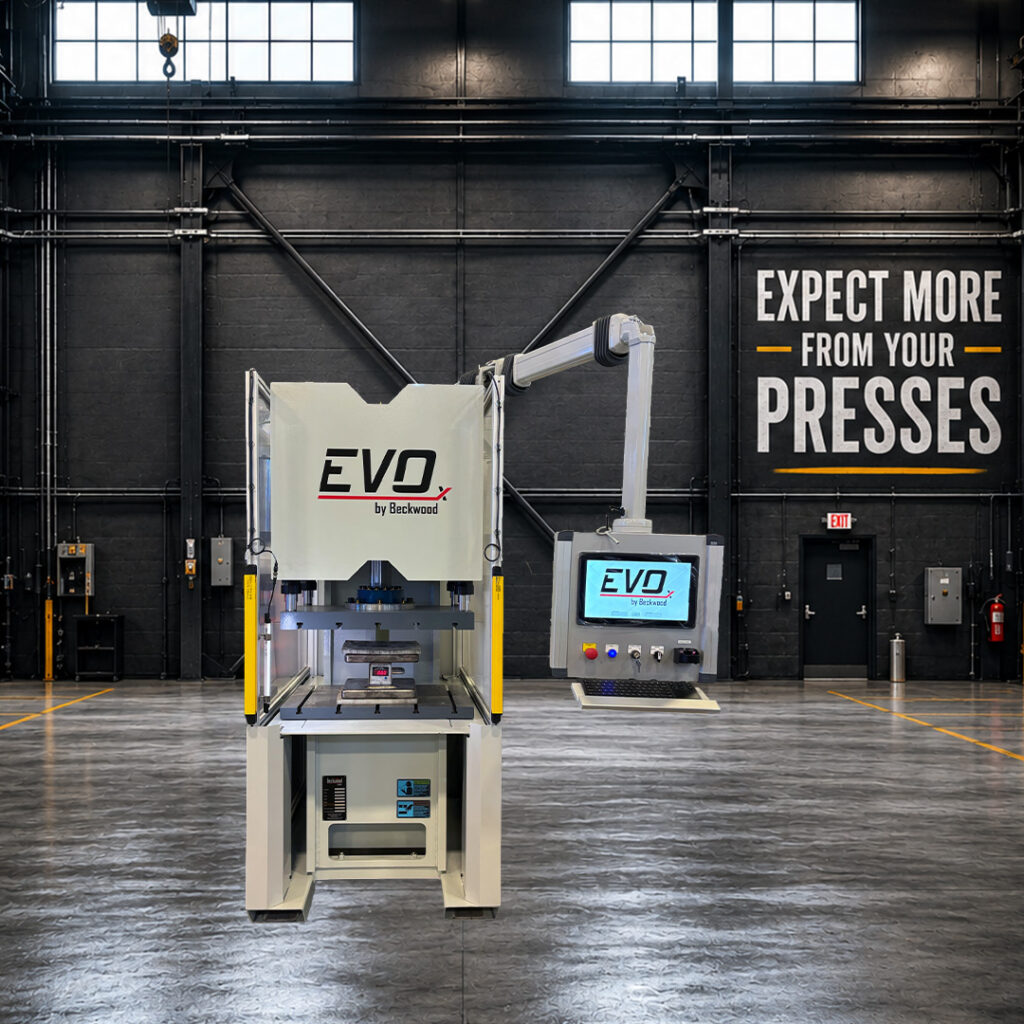
The EVOx series was developed to address these mainstream manufacturing requirements while still offering meaningful flexibility. Manufacturers can configure tonnage capacities, stroke lengths, control packages, and tooling accommodations without commissioning an entirely new design.
This middle ground gives engineering teams access to practical customization while avoiding the complexity associated with fully bespoke systems.
For manufacturers seeking predictable implementation schedules, this balance often represents an attractive compromise.
When Validation and Familiarity Matter
A standard platform benefits from repeated use across multiple installations and industries. Mechanical layouts, hydraulic systems, and control strategies have already been applied in production environments, giving engineering teams greater confidence during specification reviews.
That familiarity can simplify internal approvals and capital equipment discussions. Plant teams may already understand service requirements, operator training expectations, and maintenance planning associated with established equipment architectures.
Custom systems frequently introduce new variables that require additional review cycles before final approval. While these projects can produce highly specialized capabilities, some manufacturers prefer the lower adoption barrier associated with proven platforms.
The result is often a smoother transition from purchase order to production readiness.
When Future Expansion Is Part of the Strategy
Manufacturers rarely purchase equipment with only today’s workload in mind. Capacity planning often includes additional shifts, new product introductions, and facility expansion initiatives.
Standardized platforms can support these strategies by creating consistency across multiple production cells. When equipment shares similar controls, interfaces, and service procedures, scaling production becomes more straightforward.
Organizations adding several presses over multiple years may benefit from maintaining common equipment standards across locations. Spare parts management becomes simpler, technician training requirements remain familiar, and process replication becomes easier.
These advantages are often overlooked during initial purchasing discussions, yet become increasingly valuable as production footprints grow.
When a Fully Custom Solution Still Makes Sense
Despite the advantages associated with standardized equipment, some applications still justify a custom hydraulic press approach.
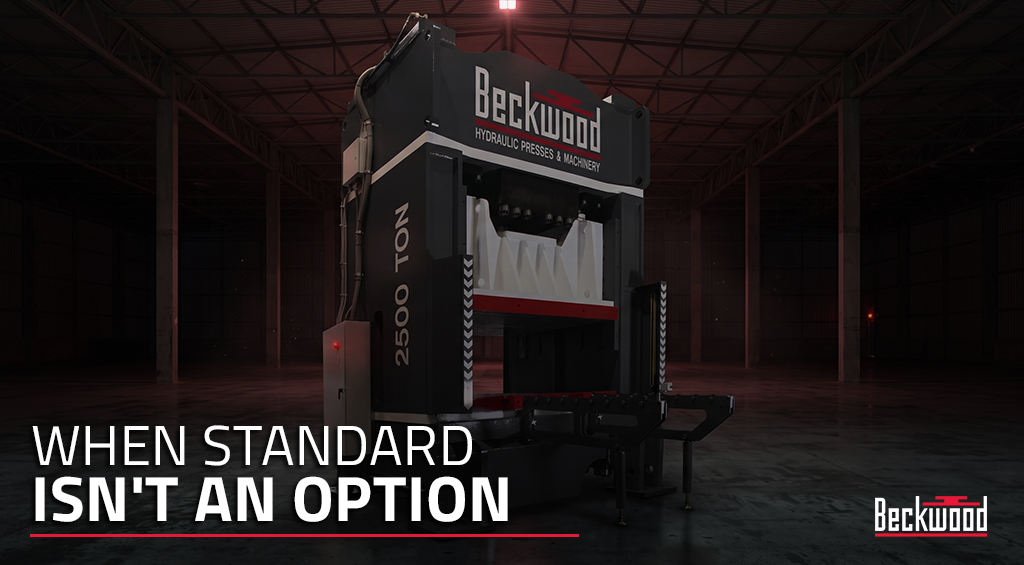
Very large forming requirements, unusual part geometries, advanced automation integration, proprietary process development, and highly specialized safety requirements may require engineering beyond the boundaries of standard platforms.
Beckwood has built its reputation on these complex projects, developing hydraulic presses for aerospace forming, compression molding, hot stamping, and advanced manufacturing applications requiring specialized engineering expertise.
In these cases, customization becomes a strategic investment rather than an added feature.
Have a unique application or a tight production deadline?
Beckwood Press is up to the challenge.
Choosing the Right Path
The decision between a standard platform and a custom hydraulic press should begin with production goals rather than assumptions about flexibility or sophistication.
Manufacturers needing rapid deployment, proven architecture, and configurable hydraulic press options often find that the EVOx platform or the Ascent Fast Lane Program aligns closely with their requirements. Organizations pursuing highly specialized manufacturing objectives may discover that custom engineering remains the better long-term investment.
The most effective equipment strategy is not determined by how much customization is possible. It is determined by how closely the selected press aligns with production priorities, timelines, and growth plans.
By offering both fully engineered systems and standardized solutions, Beckwood Press gives manufacturers the ability to match equipment strategy with business strategy rather than forcing projects into a single development model.
Evaluating Internal Resources Before Selecting a Platform
Another factor involves the availability of engineering resources. Specifying a custom hydraulic press frequently requires deeper collaboration between equipment suppliers, tooling teams, production engineers, and integrators. Design reviews may include multiple revisions as requirements evolve during project development.
A standard platform reduces much of that workload because many design decisions have already been made. Engineering teams can focus on tooling integration and production planning rather than creating a new machine specification from the ground up.
For organizations managing multiple capital projects simultaneously, this reduced engineering burden can free valuable technical resources for other priorities.
Service and Support Considerations
Choosing between a standard press platform and a custom hydraulic press ultimately comes down to aligning equipment capabilities with production requirements, timelines, and long-term business objectives.
For manufacturers seeking faster deployment, proven architectures, and configurable hydraulic press options, Beckwood’s EVOx series and Ascent Fast Lane Program provide an attractive balance of speed and flexibility. These standardized solutions can support capacity growth, product launches, and facility expansion without the extended engineering timelines often associated with fully bespoke systems.
However, applications involving specialized forming requirements, advanced automation, or unique geometries may still benefit from a custom hydraulic press. Beckwood’s ability to deliver both approaches allows manufacturers to select the solution best aligned with their technical needs and future growth strategies and plans.
What can Beckwood's engineering expertise bring to your facility?