

Fluid Cell
Sheet Hydroforming
Home / Press Applications / Fluid Cell Sheet Hydroforming
Precision Forming with a Single Tool
Create Near Net-Shape Parts
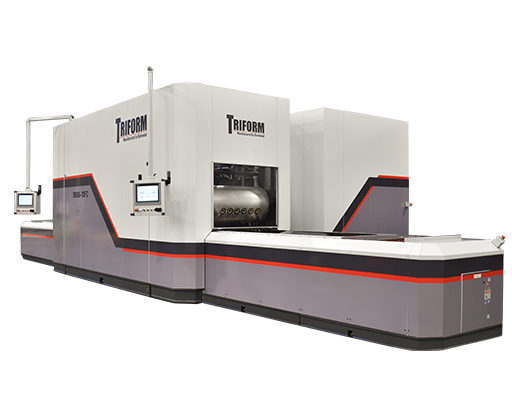
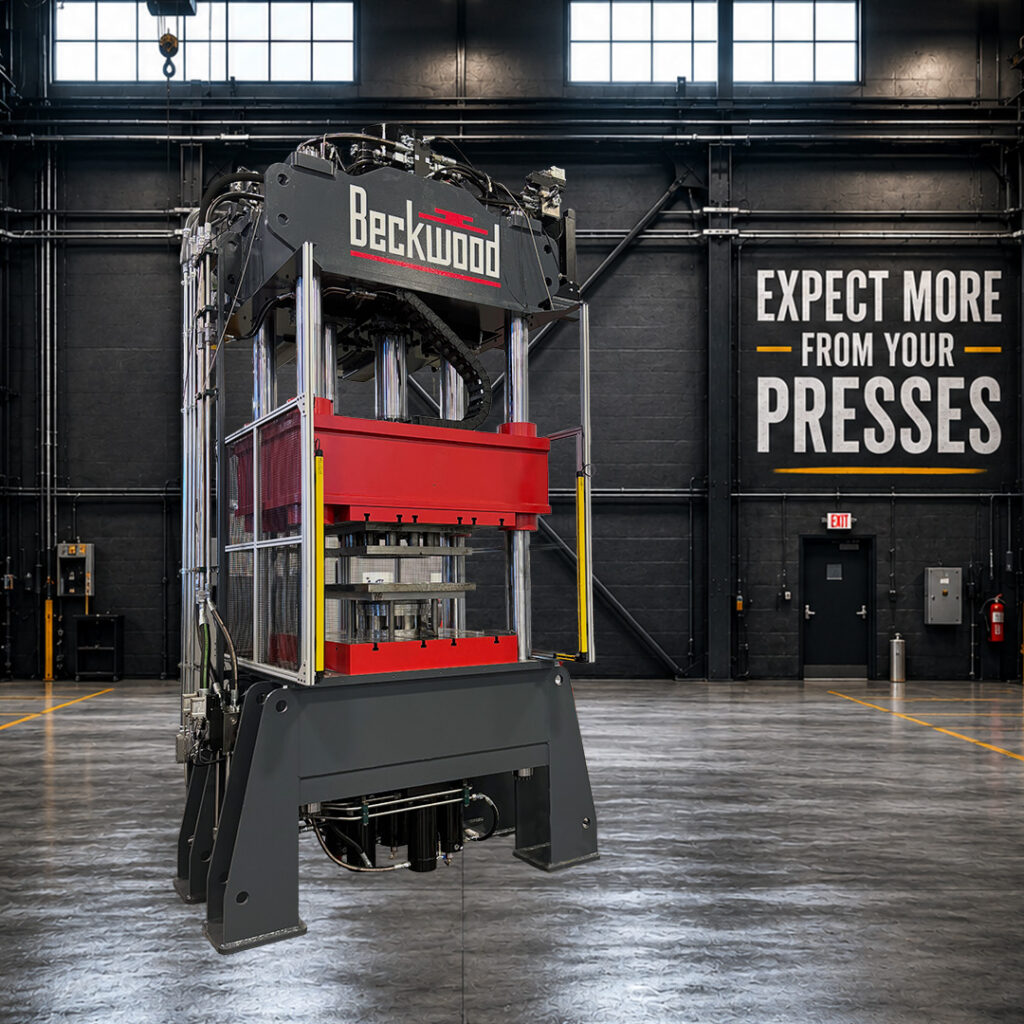
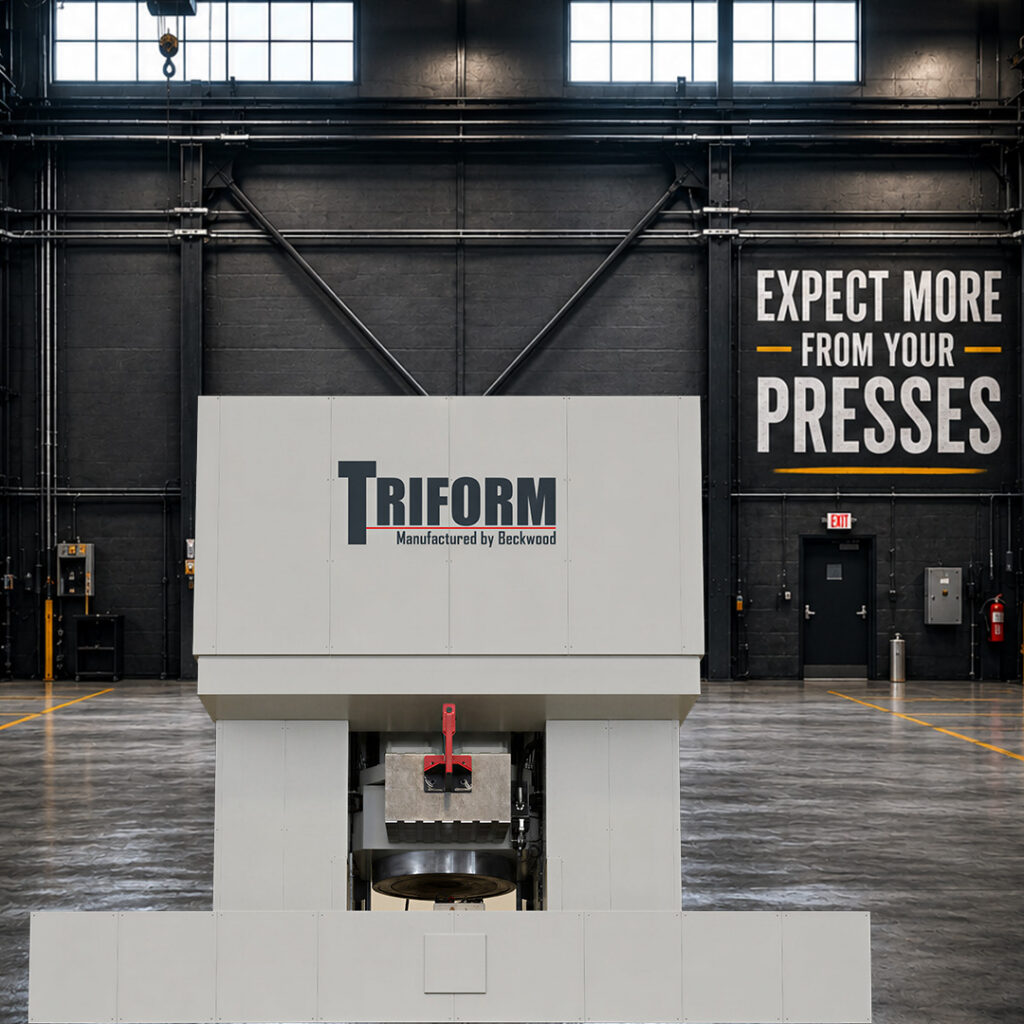
Triform’s fluid cell sheet hydroforming presses come in a variety of sizes to accommodate parts ranging from 2″ to 120” long. Unlike traditional pad forming, which applies pressure only on the top surface of the part, Triform presses apply uniform pressure on every square inch of the part. Additionally, multiple parts can be formed in a single fluid cell cycle as long as the tools and blanks fit within the forming area, including parts of different sizes.
Why Existing Hydroform Users Choose Triform

Bladder changeover cost
Changing a bladder on an existing Verson tray machine is costly and time-consuming, resulting in more down time. A Triform bladder change is a semi-automated process that can be completed in a fraction of the time and cost compared to older equipment.

Higher Uptime
All designs utilize modern components that are supported world-wide, eliminating the need to custom design components to get the machine running.

Faster Cycle Times
To prolong the life of an existing larger tray machine, or just cause less down-time, it is common to supplement an existing tray machine with a smaller Triform to offload the majority of the parts on a machine with minimal set up and cycle times around 20 seconds.

Explore Fluid Cell Options
- Dual Shuttle
- Increased Forming Pressure
- Increased Tray Depth
- Custom Sizes Available Upon Request
Fluid Cell
| Model | Forming Area | Max Forming Pressure (PSI) | Max Tool Height / Tray Depth |
|---|---|---|---|
| 16-5FC | 16" | 5,000 | 5" |
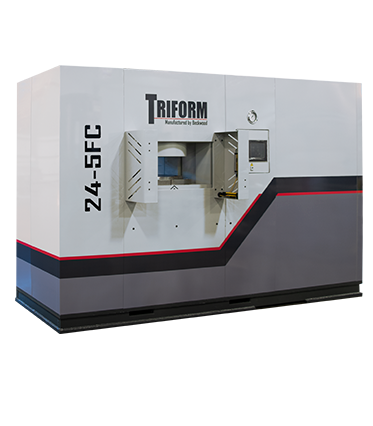
| 24-5FC | 24" | 5,000 | 5" |
| 42-5FC | 42" | 5,000 | 5" |
| 3648-10FC | 36"x48" | 10,000 | 8" |
| 3678-10FC | 36"x78" | 10,000 | 8" |
| 3696-10FC | 36"x96" | 10,000 | 8" |
| 36120-10FC | 36"x120" | 10,000 | 8" |
Why New Hydroform Users Choose Triform
Lower
Tooling
Cost
Form parts using a single form block, eliminating the expense of a matched stamping die set.
Reducing Secondary Handwork
Many struggling with contour flanges or more complex geometries in a rubber pad process will transition to a fluid cell hydroform to significantly reduce the overall time a specific part may take to complete.
Rapid
Prototyping
to Production
Easily move from one-off prototypes to production runs without tooling changes.
Superior
Surface
Quality
Eliminating metal to metal contact and the witness marks associated with mated die forming can significantly reduce costly secondary finishing.
Eliminating
Multi-part
Assemblies
Many applications include different part stampings or press brake work that are ultimately welded together to make the final assembly. Forming a complete part provides better aesthetics and can result in significant savings on the floor.
FAQs
Fluid Cell Sheet Hydroforming FAQ
How Does Fluid Cell Sheet Hydroforming Work?
In fluid cell sheet hydroforming, the operator will place a blank (in many cases, a net-shape blank) over a single male, or female, tool. Once the chamber closes, the bladder will typically target a single desired pressure input by the operator, forming the material over the tool. The benefit compared to similar forming processes, such as rubber pad forming, is that this process provides equal pressure throughout the forming area, resulting in the ability to form more complex geometries (compression flanges, stretch flanges, return flanges, etc.) while minimizing secondary hand work.