

Sheet
Hydroforming
Home / Press Applications / Sheet Hydroforming
Where Sheet Hydroforming Is Used In Manufacturing
Hydroforming is defined as the process in which metal is shaped using fluid dynamics. Sheet Hydroforming in particular is a sheet metal forming process that utilizes a pressurized rubber bladder (diaphragm) to form sheet metal material over a single male or female tool. Unlike traditional stamping or deep drawing, which rely on rigid tooling, hydroforming offers a uniform distribution of pressure, allowing for the creation of complex, high-precision parts with minimal tooling and material waste.
Sheet hydroforming is best suited for high-mix, low-volume production environments where flexibility, reduced tooling cost, and part consistency are prioritized over maximum throughput. As a result, it is commonly used for prototype through production manufacturing in aerospace, defense, space, medical, and other industries where part variety and forming quality are critical.
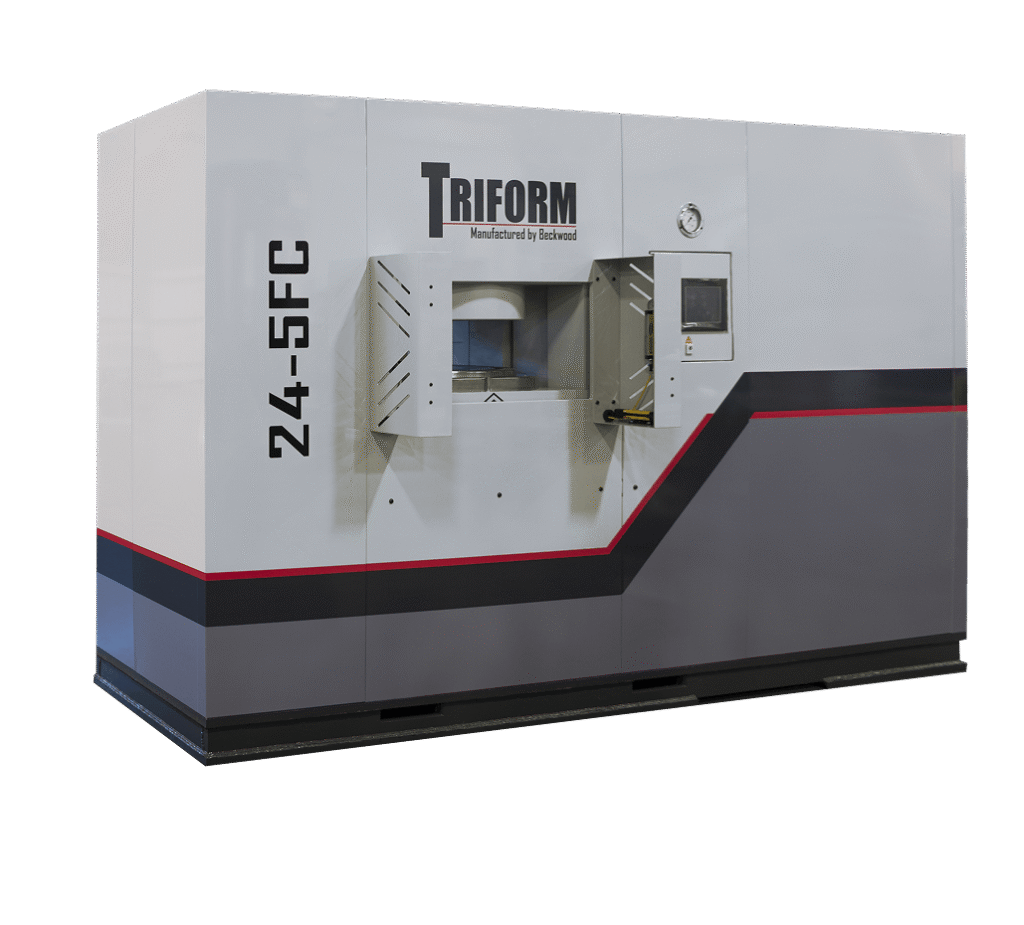
Sheet Hydroforming Processes: Fluid Cell vs Deep Draw
Sheet hydroforming generally falls into two primary process categories: fluid cell sheet hydroforming and deep draw sheet hydroforming. While both processes use controlled bladder pressure to form sheet metal, part geometry and forming requirements ultimately determine which approach is best suited.
Fluid Cell
Fluid cell sheet hydroforming forms a blank, typically net shape or near-net, over a single tool half using fluid pressure applied through a flexible diaphragm. This process is well suited for parts with shallow to moderate depth, complex surface features, and minimal draw requirements. Because only one tool half is required, fluid cell hydroforming offers extremely low tooling cost and rapid setup, making it ideal for high-mix environments and frequent part changeovers.
Deep Draw
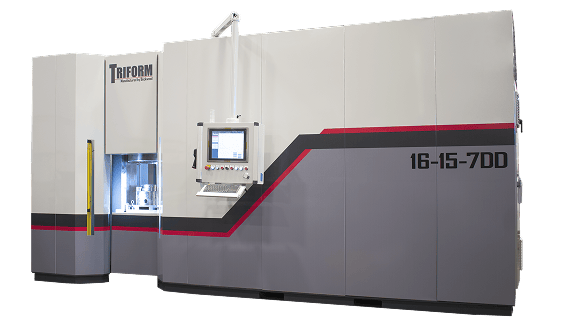
Deep draw sheet hydroforming uses a punch and draw ring in combination with controlled bladder pressure to progressively form the blank as the punch moves into the bladder. Pressure is typically varied throughout the draw to support material flow as draw depth increases. This process is better suited for deeper geometries, tighter radii, and parts requiring greater control of material flow and wall thickness.
TRIFORM Sheet Hydroforming Advantages

Controlled Pressure vs. Displacement-Based Systems
Legacy hydroform systems rely heavily on displacement-based pressure behavior, often requiring operator experience to achieve consistent results. TRIFORM systems generate and control pressure precisely throughout the forming cycle, improving repeatability, minimizing scrap, and, in some cases, reducing the need for intermediate anneal steps depending on material and part geometry. Improved control can also allow consolidation of multiple legacy machines into a single, more capable system with the ability to form smaller parts on larger machines.

Reduced Reliance on Skilled Labor
Hydroforming has historically been viewed as a “black art” due to its reliance on operator experience. TRIFORM’s recipe-based controls, In-Sight feature for part development, and programmable process sequencing help convert this variability into a controlled, repeatable process, improving consistency across operators and shifts.

Compatibility with Existing Tooling
Many manufacturers continue to operate legacy Cincinnati or Verson hydroforms with decades of accumulated tooling. TRIFORM systems can often be engineered to accommodate existing tooling with minimal (if any) modification, supporting a seamless transition to modern equipment.

Optimized Lower Punch Force & Machine Sizing
For larger diameter parts requiring higher forming pressures, TRIFORM systems can be engineered to deliver the required pressure while optimizing overall machine size and punch force to align with actual production needs.

Reduced Bladder Change Time
Depending on configuration and process type, TRIFORM bladder changes can range from approximately 30 minutes up to 6-8 hours, representing a significant reduction in downtime and maintenance effort compared to many legacy systems.

Service, Support & Long-Term Maintainability
TRIFORM systems are designed and built in the United States using standard, readily available components to support long-term uptime and serviceability. Beckwood’s service and support programs are structured to support the full lifecycle of the equipment.
Sheet Hydroform FAQ
When is sheet hydroforming the right forming process?
Sheet hydroforming is best suited for high-mix, low-volume production environments where tooling cost, flexibility, and forming quality are critical. It is generally not intended for high-volume production requiring dedicated, high-speed equipment.
How do I choose between fluid cell and deep draw sheet hydroforming?
Part geometry is the primary driver. Fluid cell hydroforming is typically used for shallow to moderate depth parts with complex surfaces, while deep draw hydroforming is better suited for deeper draws, tighter radii, and applications requiring greater control of material flow.
How do modern TRIFORM systems differ from older Cincinnati or Verson hydroforms?
Modern TRIFORM systems use programmable pressure profiles, repeatable cycle sequencing, and closed-loop controls to reduce variability and reliance on operator experience. This improves consistency, reduces scrap, and simplifies daily operation.
Can modern hydroforming reduce anneal steps?
In some applications, improved pressure control and forming consistency can reduce variability and potentially reduce the need for intermediate annealing. This is highly dependent on material type, geometry, and forming severity and should be evaluated case by case.
Can Beckwood design a hydroforming system around my existing tooling or facility?
Yes. Beckwood engineers hydroforming systems around part requirements, tooling strategies, facility layouts, and production objectives, including modernization projects replacing legacy hydroform equipment.
Beckwood’s Place In Hydroforming History
Hydroforming has become a broadly used term within the manufacturing landscape and generally falls into two primary categories: tube hydroforming and sheet hydroforming.
The origins of tube hydroforming trace back to the early 1900s, when early patents proposed using internal fluid pressure rather than mechanical mandrels to form cylindrical components. While these early concepts were not widely adopted at the time, meaningful industrial advancement occurred in the 1940s with the development of seamless copper fittings formed using internal pressure and axial loading. This same fundamental approach closely resembles modern tube hydroforming, which has since become widely adopted, particularly within the automotive industry.
Sheet hydroforming became industrialized in the late 1940s and early 1950s with the introduction of the deep draw hydroform by Cincinnati Milacron (Cincinnati Milling Machine Company, founded by Geier and Holtz in 1889). This technology simplified forming by eliminating the need for matched tooling and enabled more complex parts to be formed in fewer operations. As a result, sheet hydroforming became widely adopted in applications such as lighting reflectors, as well as aerospace and defense components, where high-mix, low-volume production and reduced tooling costs were critical.
By the mid-1970s, Verson Allsteel Press Company acquired the Milacron hydroform business and continued development under the Verson Hydroform name. Verson also played a key role in advancing fluid cell sheet hydroforming as an alternative to rubber pad forming, offering improved consistency and forming capability. Over time, however, the availability of newly manufactured hydroform equipment in the United States became increasingly limited.
The TRIFORM product line was developed in 2007 in response to growing demand within the aerospace and defense industries for a modern, U.S.-based sheet hydroforming solution. Since its introduction, the TRIFORM platform has incorporated decades of real-world user, operator, and application experience to deliver a next-generation hydroforming system focused on consistency, control, and daily usability.