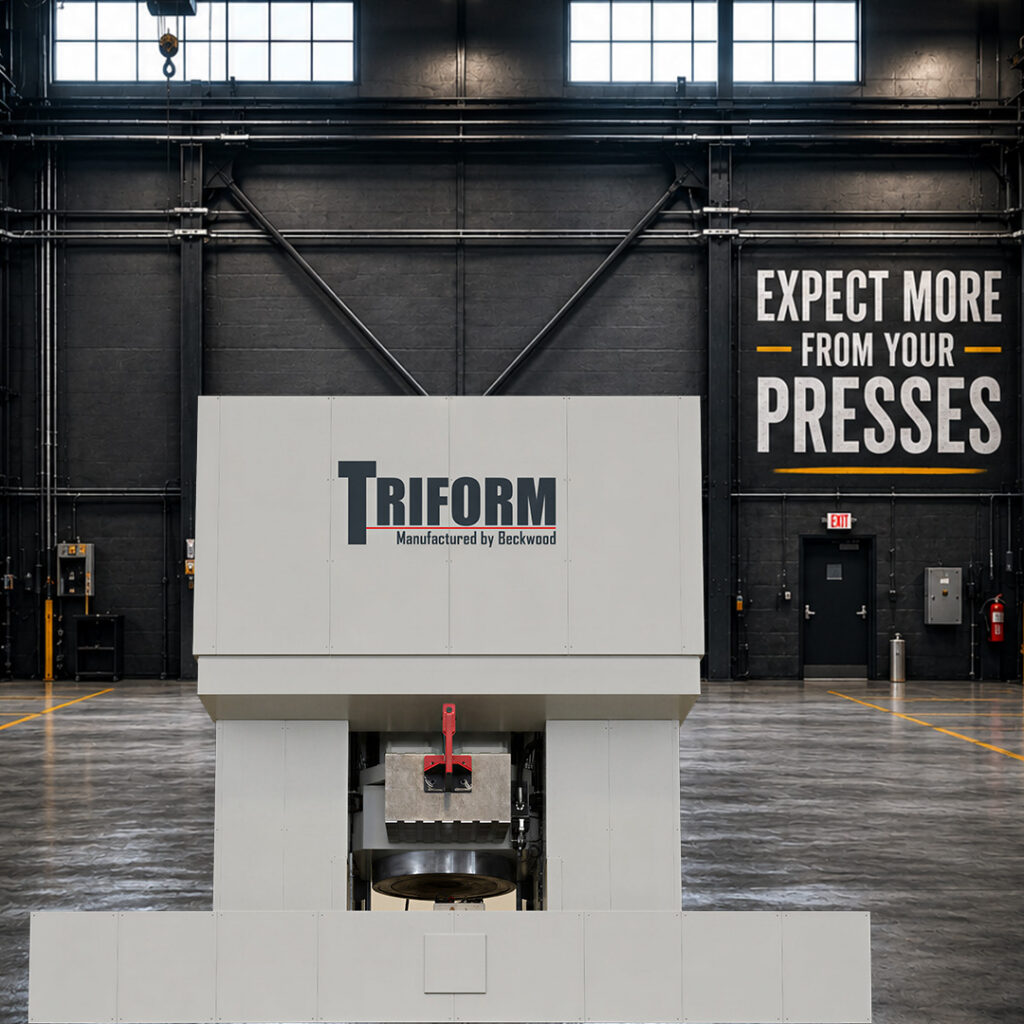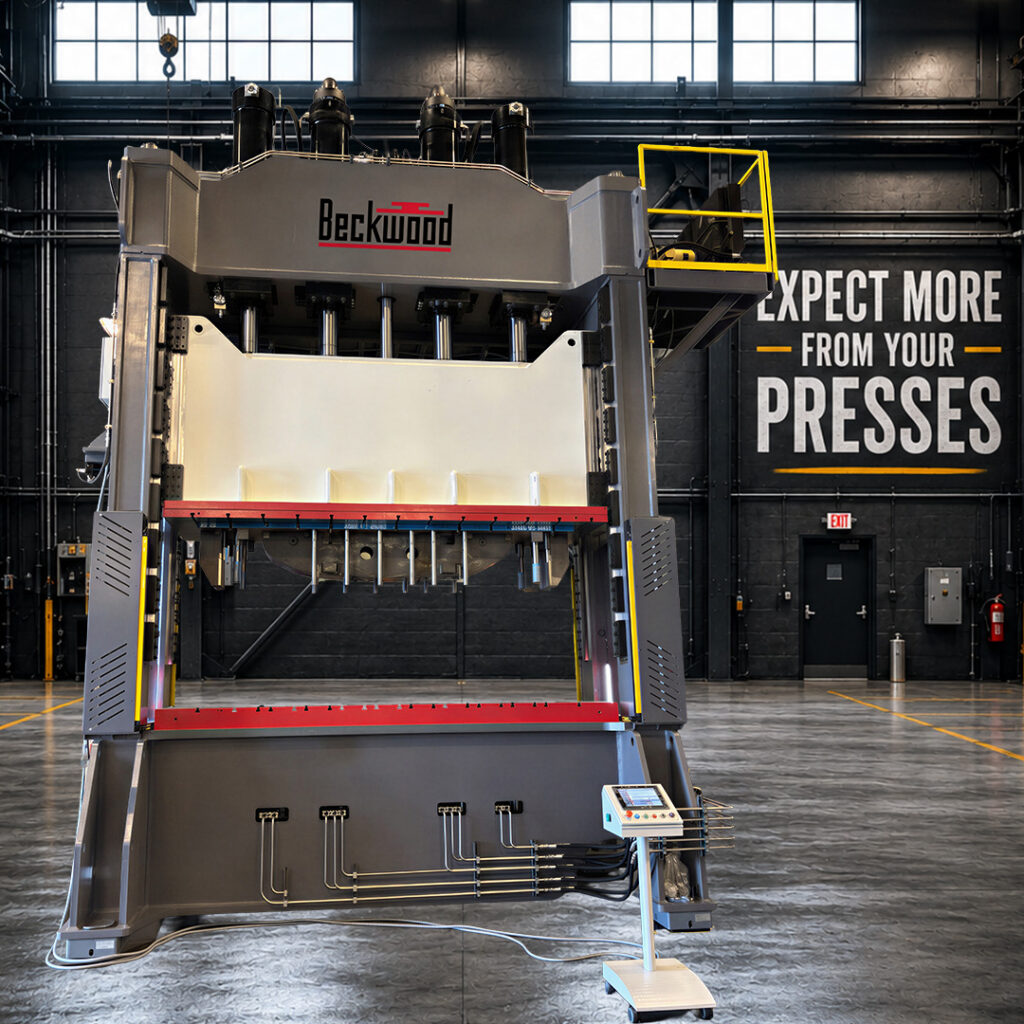




St. Louis, MO – An India-based aerospace supplier was looking to expand their capacity to meet the increasing demands of their customers which include Boeing and Airbus. They approached Beckwood with an interest in the Triform line of sheet hydroforming and stretch forming equipment to fulfill several newly awarded contracts. Beckwood is the only OEM in the world able to provide such a diverse mix of forming technologies, making them the ideal single-source supplier of precision forming equipment.
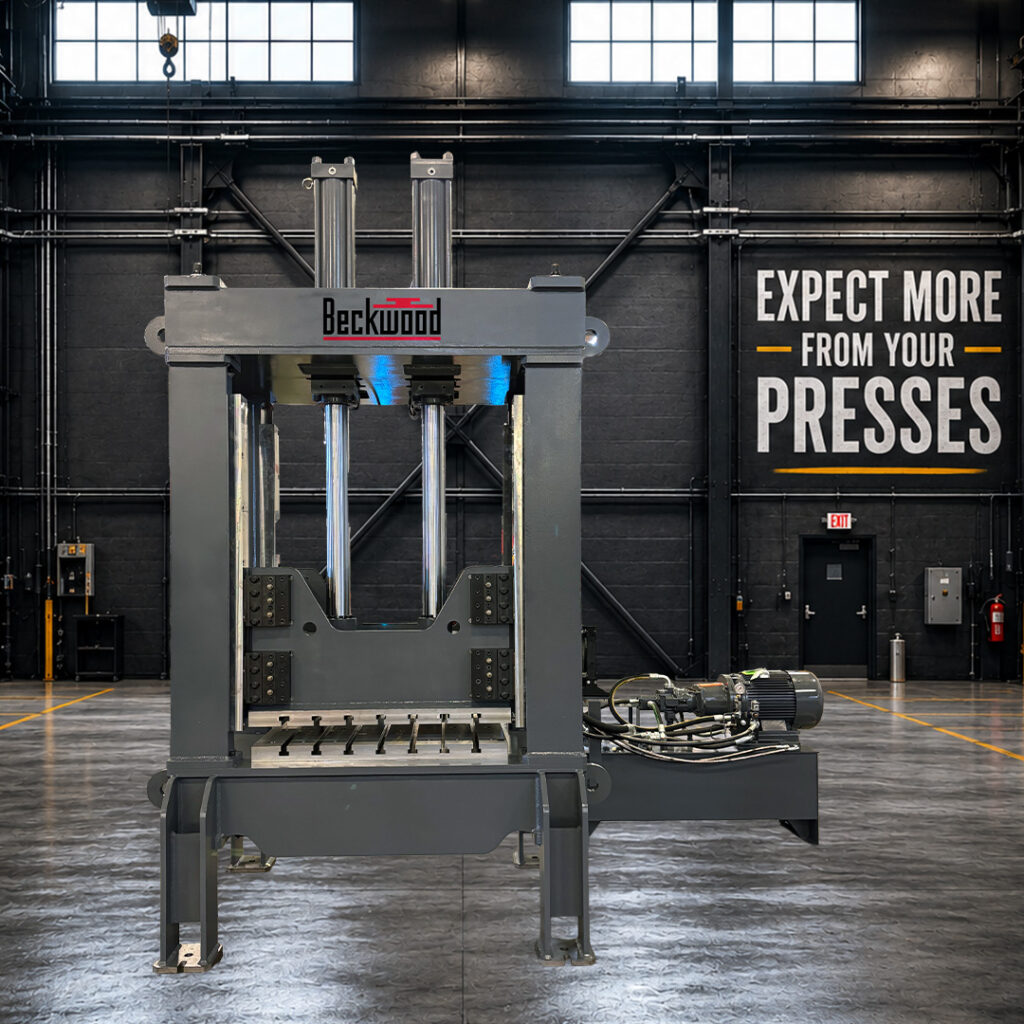
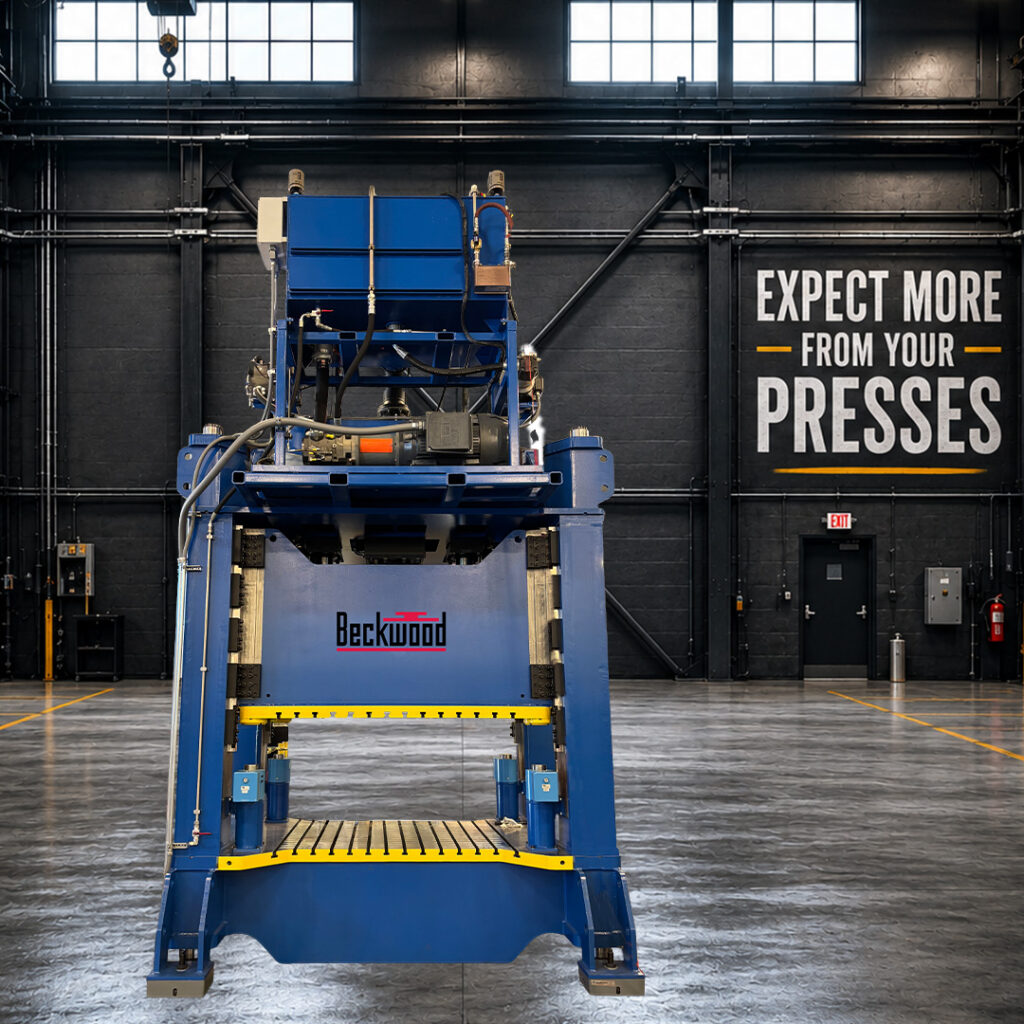
To meet the customer’s requirements, Beckwood supplied a Triform tray-style fluid cell sheet hydroforming press and an extrusion stretch forming machine. Throughout the sales and engineering processes, Triform collaborated with the manufacturer to develop the ideal machinery based on their part requirements.
With a 24” x 96” forming area and a dual shuttle system to maximize efficiency, the Triform model 2496-5FC is ideal for the low volume, high mix production requirements in the aerospace industry. During the fluid cell forming process, blank sheet material is placed over a single, unmated tool which sits on the working surface. A pressurized rubber diaphragm extends over the tool and blank, exerting equal pressure on every square inch of the part’s surface. The even application of pressure offers net shape part production while minimizing wrinkles, improving part definition, and reducing hand finishing. The 2496-5FC’s tray-style working surface not only allows the manufacturer to form large parts utilizing a single tool, but also enables them to form multiple small parts in a single cycle, increasing output.
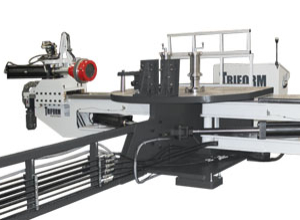
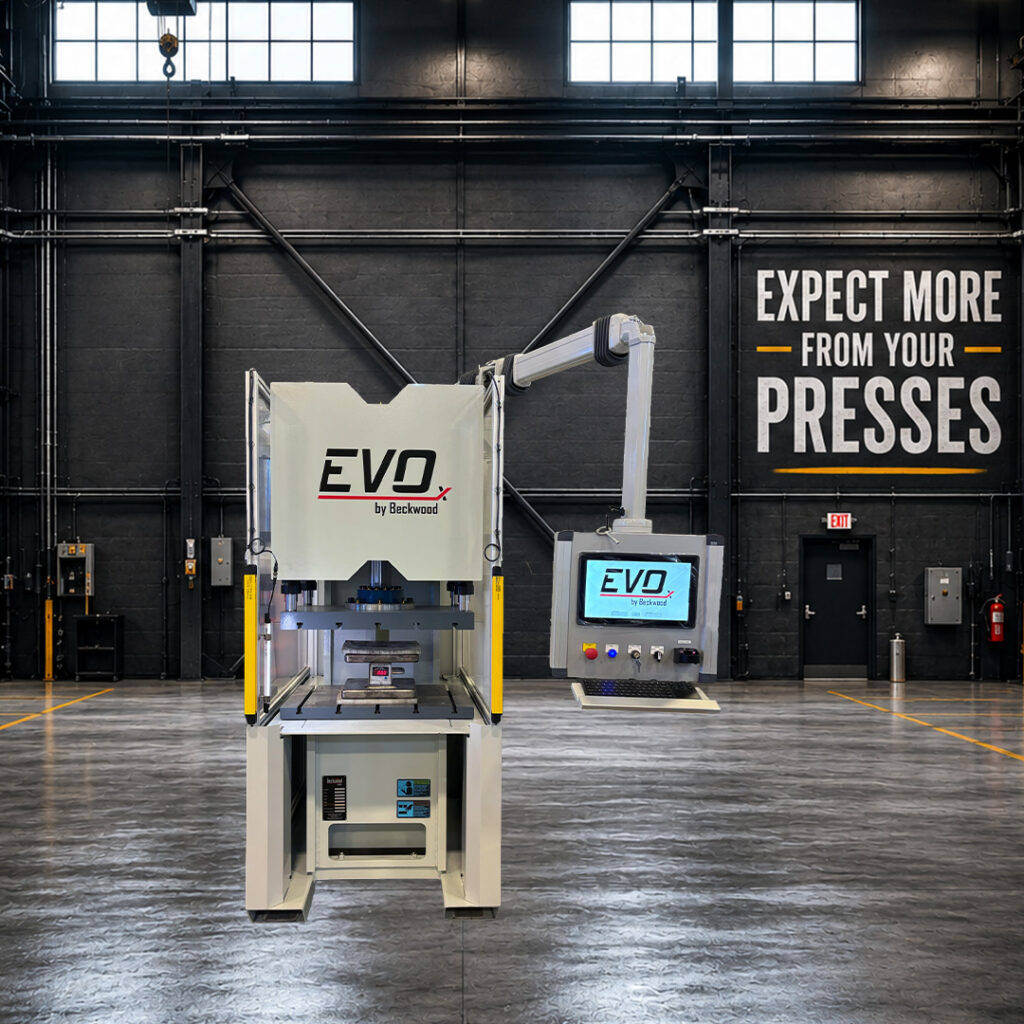
Also included in the package was a 28-ton extrusion stretch form machine. Capable of forming parts up to 120” long, the machine boasts recipe handling capabilities and a bar code scanner for easy set-up and repeatable forming results. During the stretch forming process, metal sheets or extrusions are stretched to exceed their inherent elastic limit and formed around contoured dies to create the desired shape. This “stretching” results in stronger finished parts with better shape control, surface quality, and yield strength than rolled or drawn parts.
Standard on every Triform press are several proprietary uptime-focused technologies designed to shift maintenance efforts from reactive to proactive. Using closed-loop monitoring, the on-board Pre-Preventive Maintenance system (PPM) measures component and system performance in real time and relays critical maintenance data via on-screen notifications and email. To facilitate fast, complimentary troubleshooting and remote support, a PressLink connect module was included on both machines. PressLink allows Triform technicians to access a machine’s programming structure in order to identify and resolve issues without the need for an on-site visit.
“Triform is proud to support the rapidly growing aerospace market in India,” said Beckwood President, Jeffrey Debus. “Our precision machinery and unrivaled service and support capabilities keep us on the leading edge of technology and offer our customers a competitive advantage in the marketplace.”
SUCCESS STORY: Aerospace Supplier Purchases Seven Triform Presses
Why Low Deposit Gambling Is Growing in New Zealand According to 5DollarDepositCasinos
Over the past several years, New Zealand’s online gambling landscape has undergone a quiet but significant transformation. Where once players were expected to commit substantial sums before they could access real-money casino games, a growing number of platforms now accept deposits as low as five New Zealand dollars. This shift is not accidental, nor is it purely a marketing tactic. It reflects deeper changes in consumer behaviour, regulatory positioning, and the technological infrastructure underpinning modern online casinos. Understanding why low deposit gambling has gained such strong traction in New Zealand requires looking at the intersection of economic pressures, the country’s unique legal environment, and the evolving expectations of a digitally literate player base.
The Regulatory Context Shaping New Zealand’s Gambling Market
New Zealand operates under one of the more unusual gambling regulatory frameworks in the developed world. The Gambling Act 2003 remains the primary piece of legislation governing gambling activities within the country, and it was written at a time when online casinos were still a nascent industry. Under this Act, it is technically illegal for a company to operate an online casino from within New Zealand, but there is no explicit prohibition on New Zealand residents accessing offshore-licensed platforms. This legal ambiguity has created a de facto open market, where players freely use internationally licensed casinos without fear of prosecution.
The New Zealand government has historically relied on the state-owned TAB and Lotto New Zealand for domestic gambling revenue, while turning a blind eye to the offshore online casino sector. This approach began attracting scrutiny around 2019 and 2020, when consumer advocacy groups and the Department of Internal Affairs started raising concerns about problem gambling rates and the lack of player protections on offshore platforms. However, comprehensive reform has moved slowly. As of 2024, no sweeping new legislation has been enacted, leaving the offshore market largely self-regulated through the licensing bodies of jurisdictions like Malta (the Malta Gaming Authority), Gibraltar, and Curaçao.
For operators, this regulatory environment means that competing for New Zealand players is a matter of differentiation rather than compliance with local mandates. Reducing minimum deposit thresholds became one of the most effective tools for attracting and retaining players who might otherwise be cautious about committing to an unlicensed-in-NZ platform. A five-dollar deposit lowers the psychological and financial barrier to entry considerably, and it aligns with a broader industry strategy of building trust incrementally rather than demanding large upfront commitments.
Economic Factors and the Changing Profile of New Zealand Gamblers
New Zealand’s cost of living has risen sharply since 2020. The Reserve Bank of New Zealand’s series of interest rate increases between 2022 and 2023 — the Official Cash Rate climbed from 0.25 percent in late 2021 to a peak of 5.5 percent by mid-2023 — placed significant pressure on household budgets. Mortgage repayments increased substantially for homeowners coming off fixed-rate terms, and discretionary spending contracted across multiple consumer categories, including entertainment.
In this environment, the appeal of low deposit gambling becomes straightforward. A player who might previously have deposited NZD 20 or NZD 50 to enjoy a session of online pokies or live dealer blackjack is now more likely to seek out platforms where NZD 5 provides a meaningful entry point. This is not about problem gambling or reckless spending — it is about recreational players managing their entertainment budgets with greater precision. The five-dollar deposit model fits neatly into a framework where gambling is treated as a discretionary leisure activity with a defined, modest budget.
Demographic shifts also play a role. Younger New Zealanders, particularly those in the 25 to 35 age bracket, have grown up with mobile-first digital experiences and are accustomed to micro-transaction models in gaming and streaming. They are less likely to perceive a small deposit as a sign of a low-quality platform and more likely to view it as a sensible and flexible way to engage with casino entertainment. This cohort is also more likely to research platforms carefully before depositing, consulting community forums, review aggregators, and specialist resources. Sites like https://www.5-dollar-deposit-casinos.com have emerged specifically to serve this research-oriented player, cataloguing which platforms accept low minimum deposits and what terms apply to bonuses associated with those deposits.
The rise of instant payment methods has also contributed to the growth of low deposit gambling. The adoption of POLi, PayID-style bank transfers, and e-wallets such as Skrill and Neteller has made it technically feasible to process a five-dollar transaction efficiently. Earlier payment infrastructure often imposed minimum transaction fees that made small deposits economically unviable for operators. As payment processing costs have declined and digital wallet penetration has increased, the operational barriers to accepting small deposits have largely disappeared.
How Operators Have Adapted Their Bonus Structures for Low Deposit Players
One of the more interesting developments in the low deposit segment has been the evolution of bonus structures designed specifically around small initial deposits. Early online casino bonuses were almost universally structured around deposit matching — deposit NZD 100 and receive NZD 100 in bonus funds, for example. This model inherently excluded players making small deposits, since a 100 percent match on NZD 5 yields only NZD 5 in bonus credit, which is insufficient to generate meaningful play on most slot titles with standard minimum bet sizes.
Operators targeting the low deposit segment have responded with several structural adaptations. Free spin packages, which grant a set number of spins on specified slot titles regardless of deposit size, have become a standard feature. A player depositing NZD 5 might receive 20 or 30 free spins on a popular Microgaming or NetEnt title, providing genuine entertainment value without requiring a large initial commitment. Some platforms have also introduced tiered welcome bonuses where the first deposit tier begins at NZD 5 or NZD 10, ensuring that even the smallest depositors receive a proportionate incentive.
Wagering requirements — the multiplier applied to bonus funds before they can be withdrawn — have also evolved in response to the low deposit market. Historically, wagering requirements of 40x or 50x were common, making it extremely difficult for players to realise any value from bonus funds. Competitive pressure in the New Zealand market, driven partly by resources like 5DollarDepositCasinos that compare and evaluate bonus terms transparently, has pushed many operators toward more reasonable requirements in the 20x to 35x range. This transparency pressure has been genuinely beneficial for consumers, as operators who offered misleading or exploitative bonus terms found themselves poorly reviewed and avoided by informed players.
It is also worth noting the role of no-deposit bonuses in the low deposit ecosystem. While technically distinct from low deposit offers, no-deposit bonuses — typically small amounts of bonus credit or free spins granted upon registration — have become a gateway product that introduces players to a platform before any financial commitment is required. Many players who claim a no-deposit bonus and have a positive experience will subsequently make a small deposit to continue playing, making no-deposit bonuses a meaningful part of the low deposit acquisition funnel.
The Role of Mobile Technology and Platform Accessibility
New Zealand has one of the highest smartphone penetration rates in the Asia-Pacific region, with Statistics New Zealand data indicating that mobile internet usage has consistently exceeded desktop usage for consumer-facing digital services since approximately 2018. For the online gambling sector, this has meant that the mobile experience is not a secondary consideration but the primary one. Platforms that have invested in responsive design, native mobile applications, and mobile-optimised payment flows have captured a disproportionate share of the New Zealand market.
The connection between mobile-first design and low deposit gambling is more direct than it might initially appear. Mobile users tend to engage in shorter, more frequent sessions compared to desktop users, who are more likely to commit to extended play. A player accessing a casino on their smartphone during a commute or lunch break is not looking to deposit NZD 100 and spend two hours at a virtual poker table. They want to make a small deposit quickly, play a few rounds of a favourite slot, and close the app. The five-dollar deposit model is structurally aligned with this usage pattern in a way that higher minimum deposit requirements simply are not.
The integration of biometric authentication — fingerprint and facial recognition login — into mobile casino apps has also reduced friction in the deposit process. Where a desktop player might need to navigate a multi-step verification process, a mobile player can authenticate and deposit within seconds. This reduction in friction makes the small, spontaneous deposit not just possible but genuinely convenient, reinforcing the behavioural patterns that drive low deposit gambling growth.
Software providers have also adapted their products to support smaller bankrolls. Game developers like Play’n GO, Pragmatic Play, and Quickspin have introduced slot titles with minimum bet sizes as low as NZD 0.10 per spin, meaning that a NZD 5 deposit provides 50 spins at minimum bet. This is enough for a meaningful session, and it ensures that low deposit players are not immediately disadvantaged by bet size constraints. The product ecosystem has, in other words, evolved in parallel with the deposit structure to create a coherent low-stakes gambling experience rather than simply a low deposit threshold attached to a game library designed for higher rollers.
Organisations tracking this segment, including 5DollarDepositCasinos, have noted that the platforms performing best in the New Zealand low deposit market are those that have addressed all three layers simultaneously: the deposit threshold, the bonus structure, and the game library. Platforms that reduced their minimum deposit but failed to offer appropriately structured bonuses or suitable game content saw limited uptake, confirming that low deposit gambling is a holistic product category rather than a single feature.
The growth of low deposit gambling in New Zealand is ultimately a story about alignment — between economic conditions and product design, between regulatory ambiguity and market opportunity, between mobile technology and player behaviour. The five-dollar deposit has moved from a niche offering to a mainstream expectation among a substantial segment of New Zealand online casino players, and the platforms, software developers, and information resources that recognised this shift early have positioned themselves effectively in what is now one of the more competitive segments of the country’s digital entertainment market. Whether the regulatory environment will eventually formalise and potentially constrain this market remains an open question, but for now, the structural conditions supporting low deposit gambling in New Zealand remain firmly in place.