



2025
Visit Beckwood Press at
fabtech 2025 to see whats next in forming
booth #D40918
Discover Linear Servo-Electric
Press Technology
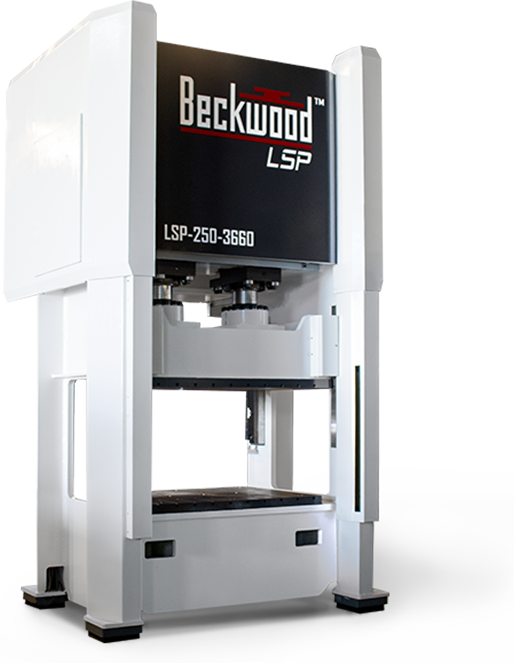
We’re going to FABTECH 2025, and you are invited to join us at booth D40918 to discover Beckwood’s LSP™ and EVOx™, two electric presses that combine the flexibility of hydraulics with the performance of servo-mechanicals.
Visitors will see first-hand the new era of press technology that uses only electricity to create force rather than hydraulic or mechanical flywheel systems. Our patented EVOx™ and LSP lines use up to 60% fewer components resulting in cost savings, increased throughput, and easy set-up.
How Bettingguideau Explains V8 Supercars Betting Odds to Australian Fans
V8 Supercars — now officially branded as Supercars Championship — remains one of Australia’s most watched domestic motorsport competitions, drawing millions of viewers each season and generating significant betting activity across the country’s licensed wagering platforms. For fans who follow the championship closely, understanding how odds are constructed, what they represent, and how they shift across a race weekend is not merely a curiosity — it directly affects how informed any wagering decision can be. The challenge is that betting markets for circuit racing operate differently from team sports, and many Australian punters who are comfortable reading AFL or NRL odds find themselves less confident when confronted with race-day markets, multi-car fields, and the volatility that comes with motorsport. Bettingguideau has developed a body of explanatory content specifically aimed at closing that knowledge gap for Australian fans, breaking down the mechanics of Supercars betting in terms that reflect how the sport actually works rather than how generic betting guides describe racing in the abstract.
Understanding How Supercars Odds Are Structured
The foundational difference between Supercars betting and most other sports betting is the field size. A typical Supercars round features between 24 and 26 drivers, which means that even the pre-season favourite — often a driver like Shane van Gisbergen, who dominated the championship across multiple seasons before his departure to North American racing — will rarely be priced below $3.00 for an outright race win. In a two-team sport, a strong favourite might be priced at $1.40 or lower. In a 25-car field, the mathematics of probability distribute the chance of winning across a much larger group, and bookmakers price accordingly.
Australian bookmakers offering Supercars markets typically structure their odds around three primary market types: outright championship winner (offered before the season begins and updated throughout), round winner (who wins the overall points across a multi-race weekend), and individual race winner (the most granular and volatile market). Each of these markets carries different implied probabilities and different levels of bookmaker margin. Championship markets, which can run from February through to November, tend to carry a higher overround — the bookmaker’s built-in margin — because the uncertainty over a full season is enormous and the bookmaker must price in a wider range of outcomes. Individual race markets, by contrast, are sharper and more efficient because they are priced closer to the event, where more information is available.
The concept of the overround is particularly important in Supercars betting and is something that Bettingguideau addresses in its explanatory guides. If you add up the implied probabilities of all drivers in a race-winner market — converting each decimal odd to a percentage by dividing 1 by the odds — the total will exceed 100%. That excess above 100% represents the bookmaker’s margin. In a 25-driver field, a typical overround might sit between 115% and 130%, meaning that for every $100 wagered across the field collectively, the bookmaker retains between $15 and $30 in theoretical profit. Understanding this helps punters recognise that simply backing drivers at random is a losing strategy in the long run, and that finding drivers whose true probability of winning is higher than what the odds imply is the only way to generate positive expected value.
Odds also shift substantially between the opening of a market and the race itself. In Supercars, qualifying is particularly significant because the championship uses a format where grid position is determined by a dedicated qualifying session, and starting position has a measurable statistical relationship with finishing position. Historical data from the championship suggests that drivers starting from the front two rows win a disproportionate share of races — particularly on street circuits like the Surfers Paradise Street Circuit or the Adelaide 500, where overtaking is more difficult than on permanent facilities like Bathurst or Winton. Bookmakers adjust their odds after qualifying to reflect grid positions, meaning a driver who qualifies third might shorten considerably from their pre-qualifying price, while a driver who qualifies fifteenth will lengthen.
The Bathurst 1000 Market and Why It Behaves Differently
No discussion of Supercars betting is complete without addressing the Bathurst 1000, the championship’s signature event held annually at Mount Panorama in Bathurst, New South Wales. The race has been run since 1963 in various formats and became a Supercars Championship fixture as the sport formalised through the 1990s. It is unique not just culturally — attracting crowds of over 200,000 across the race weekend — but structurally, because it is an endurance race run over approximately 1,000 kilometres with mandatory co-drivers, two-driver teams, and a race duration that typically exceeds six hours. These characteristics make the betting market for Bathurst fundamentally different from sprint race markets.
Because the race is so long and involves co-drivers who may have significantly different skill levels compared to the primary drivers, the odds distribution is flatter than in sprint races. Even the most fancied pairing — historically combinations like Craig Lowndes and Warren Lowndes, or more recently Shane van Gisbergen paired with experienced co-drivers — might be priced at $6.00 to $9.00, reflecting the genuine possibility that mechanical failure, safety car timing, pit strategy errors, or co-driver incidents could eliminate any team regardless of pace. This makes Bathurst one of the more genuinely open betting markets in Australian motorsport.
Punters who want to understand how to read the Bathurst market can visit Bettingguideau, where the specific mechanics of endurance race betting are explained in the context of the Australian wagering landscape, including how co-driver quality is factored into market pricing and why the safety car period can create significant in-play market movement. The safety car element is particularly relevant: Bathurst frequently features multiple safety car deployments, and the timing of these periods relative to pit stop cycles can dramatically alter the competitive order. Bookmakers who offer in-play markets on Bathurst will often adjust odds rapidly during safety car periods, and understanding why requires knowing how pit stop strategy interacts with the safety car rules under the Supercars Championship’s sporting regulations.
The Supercars Championship’s regulations for Bathurst specify minimum pit stop requirements, mandatory co-driver stints, and fuel load restrictions that create a complex strategic layer absent from sprint races. Since the introduction of the current Car of the Future (COTF) regulations — which were phased in from 2013 and have been progressively updated — the cars have become more durable and the racing closer, which has generally compressed the field and made the Bathurst result more difficult to predict. The shift to Gen3 regulations in 2023, which introduced new Chevrolet Camaro and Ford Mustang body shapes while retaining the fundamental chassis and engine architecture, also affected team performance hierarchies and required bookmakers to reassess their pricing models for the first season of the new rules.
Reading Market Signals: What Odds Movement Tells You About a Race
One of the more sophisticated aspects of Supercars betting that receives less attention in general sports betting guides is the informational content embedded in odds movement. When a driver’s odds shorten significantly in the hours or days before a race without any obvious public explanation — no qualifying result, no weather change, no team announcement — it often reflects the movement of informed money. In Australian wagering, licensed bookmakers are required to report suspicious betting activity under the National Integrity Framework, which has been progressively strengthened since the Australian Sports Anti-Doping Authority (ASADA) and various state racing bodies began coordinating more closely on integrity matters through the 2010s. However, odds movement driven by genuinely informed punters — those with superior knowledge of car setup, tyre strategy, or driver condition — is entirely legal and represents a normal feature of efficient markets.
For Supercars specifically, the information asymmetry between casual fans and more informed observers can be substantial. Teams conduct extensive testing during the off-season and between rounds, and while the championship’s regulations limit the amount of on-track testing permitted, data from these sessions gives team insiders a clearer picture of relative car performance than is publicly available. A punter who notices a driver’s odds shortening significantly before qualifying might reasonably infer that the market has received information about that driver’s pace, though it is equally possible the movement reflects nothing more than a large recreational bet.
The practical skill for punters is learning to distinguish meaningful odds movement from noise. Meaningful movement tends to be sustained — the odds shorten and stay short rather than drifting back out — and tends to occur across multiple bookmakers simultaneously rather than on a single platform. When Sportsbet, TAB, and PointsBet all shorten a driver within a short period, that convergence suggests the market is responding to genuine information flow. When only one bookmaker moves and others hold their prices, it may simply reflect that one bookmaker has taken a single large bet and adjusted to manage their liability.
Weather is another factor that creates significant odds movement in Supercars, and it operates differently from some other sports. Supercars races are run in all conditions, and the championship does not postpone races for rain. Wet conditions fundamentally alter the competitive order because not all drivers are equally skilled in the wet, and because tyre strategy becomes more complex when teams must decide whether to run wet-weather tyres or manage the transition as the track dries. Historically, drivers like Mark Winterbottom and Craig Lowndes developed reputations as particularly strong wet-weather performers, which translated into their odds shortening when rain was forecast. Understanding which current drivers have demonstrated wet-weather competence — based on historical results rather than reputation — is a form of analysis that can help punters assess whether a weather-driven odds movement is justified or represents an overreaction.
Betting Markets Across the Season: How the Championship Format Affects Wagering
The Supercars Championship runs across approximately ten to twelve rounds per season, with each round typically consisting of two or three individual races. The points system awards points for each race rather than for each round as a whole, which means the championship standings can shift substantially across a single weekend. This format has direct implications for how outright championship markets behave during the season.
At the start of a season, the championship market is genuinely uncertain, and bookmakers price the field with a relatively wide spread. By mid-season, the market typically concentrates around two or three drivers who have emerged as genuine title contenders, and the prices for the remainder of the field lengthen substantially. The 2022 season, for instance, saw Shane van Gisbergen extend a dominant lead through the middle portion of the year, which caused his championship odds to compress to the point where backing him offered minimal value for punters who had not taken a position earlier in the season. Conversely, punters who had identified van Gisbergen as undervalued before the season — his pre-season price was often above $2.50 despite his 2021 championship — found themselves holding significant value.
The structure of individual rounds also creates betting opportunities that are specific to Supercars. In formats where three races are held across a weekend, the accumulated fatigue on tyres and mechanical components across the weekend can affect performance in the final race in ways that are not always fully reflected in pre-race odds. Teams that have been more aggressive with tyre management in earlier races may have a performance advantage in the final race, while teams that have pushed harder may experience greater tyre degradation. This type of within-round analysis requires knowledge of the specific tyre allocation rules that the Supercars Championship enforces, which have varied across seasons as the championship has worked with its tyre supplier to manage costs and maintain competitive balance.
The PIRELLI and Dunlop tyre supply arrangements — Dunlop has been the spec tyre supplier for the Supercars Championship for an extended period — mean that all teams use identical tyres, which in theory eliminates tyre performance as a differentiating factor between teams. In practice, however, tyre management skill varies significantly between drivers, and teams that have developed superior data analysis capabilities can extract more consistent performance from the same compound across a race distance. This is a subtle competitive differentiator that is not always visible in qualifying times but becomes apparent in race pace data, and it represents the kind of granular analysis that separates more informed Supercars punters from those relying purely on name recognition or recent results.
Street circuits, which feature prominently on the Supercars calendar — Adelaide, Newcastle, and the Gold Coast have all hosted street rounds at various points in the championship’s modern history — introduce additional variables around track evolution. A street circuit that has been resurfaced or modified between visits will behave differently from a circuit that has been raced on repeatedly, and the grip level at the start of a race weekend is typically lower than at the end as rubber is laid down by practice and qualifying sessions. Teams and drivers who adapt quickly to a low-grip surface in early practice sessions often carry an advantage that is not yet reflected in bookmaker pricing when the first markets open for a round.
For Australian fans who engage with the Supercars Championship as both a sporting spectacle and a betting market, the depth of knowledge required to bet with genuine insight is considerably greater than it might appear from the outside. The championship’s combination of a large field, complex regulations, endurance elements at Bathurst, and a long season creates a rich environment for analysis but also a significant challenge for punters who approach it with only surface-level familiarity. The most effective approach treats the betting market as a source of information in itself — the odds reflect the collective knowledge of bookmakers and other punters — while also developing independent analytical capabilities around the specific factors that drive Supercars race outcomes.
Understanding Supercars betting odds is ultimately an exercise in translating the complexity of a professional motorsport championship into probabilistic terms. The odds offered by Australian bookmakers on any given race represent a compressed summary of what the market believes about each driver’s chances, filtered through the bookmaker’s margin and the information available at the time of pricing. Punters who take the time to understand how those odds are constructed, what drives them to move, and how the specific characteristics of Supercars as a sport affect market behaviour are in a substantially better position than those who treat the markets as a lottery. The work of explaining this relationship between sport and market — making it accessible without oversimplifying the genuine complexity — is exactly what resources like Bettingguideau aim to provide for the Australian audience that follows this championship with serious attention.

Similarly, the LSP™ model on display can operate at a 250 ton maximum force. The technology requires no crankshaft, counterbalance, flywheel, centralized lubrication, or hydraulic power unit and results in no scheduled maintenance throughout millions of cycles.
What You Can Expect from EVOx™ & LSP™
The custom EVOx™ model on display will feature a max tonnage of 100 tons, rated anywhere in the stroke via an all-electric actuation system with two linear servo actuators. Parts can be created with pinpoint accuracy on the 24-in. x 72-in. forming area at production-level speeds.
Meet the team
Our on-site Product Managers, Sales Executives, and Press Engineers will be available to answer any of your questions about servo-electric presses, and visitors are encouraged to try the press for themselves. We asked our crew to tell us a little bit about their experience here at Beckwood and what they’re looking forward to at this year’s event. Here’s what they had to say:
Gerard Choinka

How long have you been at Beckwood?
I have been working at Beckwood for 9 years.
What is your role?
Senior Sales Engineer
What do you like most about FABTECH?
I very much enjoy exhibiting at Fabtech every year. It is a great time getting in touch with existing customers and discussing new opportunities and applications with potential new customers!
Caleb Dixon

How long have you been at Beckwood?
I have been working at Beckwood for 12 years.
What is your role?
Sales Manager
What do you like most about FABTECH?
I look forward to Fabtech every year and having the opportunity to catch up with existing contacts throughout the industry, as well as meeting new companies and learning how we can support their goals!
Josh Dixon

How long have you been at Beckwood?
15 years.
What is your role?
President – My focus is to ensure that our internal and external business strategies are aligned with our customer’s needs
What do you like most about FABTECH?
I look forward to reconnecting with existing customers at Fabtech, and putting a face to a name with new potential customers. I love talking to manufacturers about challenges they’re faced with, and how Beckwood might be able to assist them. In addition to the conversation, there are always exciting new technologies that are on display and are fun to learn about!
John Janesko

How long have you been at Beckwood?
My tenure at Beckwood has reached 22 years.
What is your role?
My role is Technical Sales Engineer, with core responsibilities consisting of: Developing cost estimates for custom press products per customer spec
Assisting the salesman in a technical capacity in a customer facing role Machine concept 3D modeling and proposal drawing development (Engineering)
Ascent Product Manager
What do you like most about FABTECH?
I love to interface with customers and brainstorm on how to solve their issues, along with touring the facility and looking at all the different types of machinery that are represented.
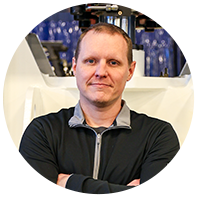
Zach Stranz
How long have you been at Beckwood?
I have been working at Beckwood going on 21 years.
What is your role?
Senior Application Engineer, Sales support from a technical perspective.
What do you like most about FABTECH?
I always look forward to connecting with existing contacts and discussing new projects.
Adam Suelmann

How long have you been at Beckwood?
I have been working at Beckwood for about 4 years.
What is your role?
Sales Engineer and product expert for our Ascent and EVOx lines.
What do you like most about FABTECH?
I look forward to Fabtech as a great way to catch up with current and potential clients to understand how we can better support their short- and long-term objectives. While also learning about the newest state of the art equipment within manufacturing.
Richard Arthur

How long have you been at Beckwood?
I have been at Beckwood for 1 year.
What is your role?
Director of Service
What do you like most about FABTECH?
This will be my first year, so I’m really looking forward to meeting customers both old and new!
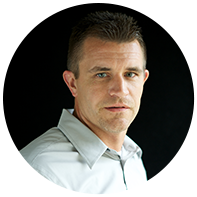
Don Jarzenbeck
How long have you been at Beckwood?
32 years
What is your role?
Senior Service Application Engineer
What do you like most about FABTECH?
I enjoy the opportunity to see all the new technology in addition to meeting new customers and learning of any potential retrofits that they may be interested in and the unique challenges that are often associated with retrofits.
Clayton Bowers

How long have you been at Beckwood?
I’ve been at Beckwood for 1 year.
What is your role?
Technical Marketing Specialist
What do you like most about FABTECH?
I really enjoy being surrounded by the latest technology and the passionate people behind the businesses. There’s always something new to see, and the interactive atmosphere makes it a really fun event!
Learn More About Beckwood’s Presses
Custom Hydraulic Presses
Ascent Standard Hydraulic
Triform
Presses
All Beckwood Presses are backed by our quality guarantee.
Register today to see the EVOx™ and LSP™ in action at FABTECH 2025.

We’re back with another giveaway, and the only way to enter is to sign up at our booth.
One lucky winner will leave FABTECH this year with a bottle of premium whiskey.
Here’s how you can register for a chance to win:
How to Enter
1. Visit Beckwood at Booth D40918
2. Speak with one of our team members
3. Fill out an entry form
Entering the giveaway is that easy!
Best of luck to all participants.