
Bulge
Forming
Home / Press Applications / Bulge Forming
Superior Uniformity
Bulge forming is a metal forming process that uses internal pressure to shape material while an external press provides the clamping force required to contain the forming pressure. During the process, a blank is sealed by the die and pressurized, typically using air or water, causing the material to expand and conform to the desired geometry. Bulge forming is commonly used in aerospace, defense, transportation, agriculture, energy and other industrial manufacturing applications.
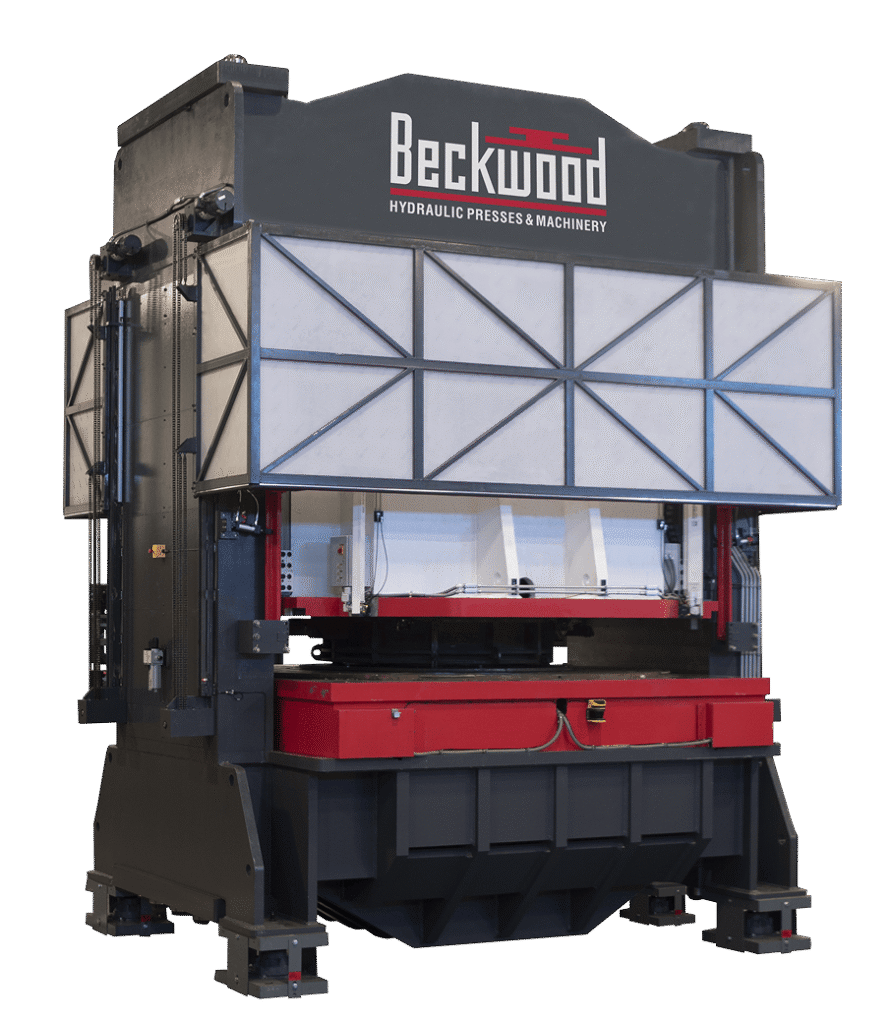
Bulge Forming Press Design & Engineering
Bulge forming press design is driven by part geometry, material type and forming pressure required. These considerations influence press tonnage, pressurization method, sealing strategy, and overall system configuration.
Pneumatic vs Water (Hydro) Bulge Forming
Pneumatic Bulge Forming
Uses air pressure and is commonly applied to spherical or domed shapes such as tank heads and rupture discs.
Water (Hydro) Bulge Forming
Uses water fluid and is typically selected for cylindrical or tubular components, or applications requiring higher forming pressures and tighter control. High-pressure hydro bulge forming systems may operate at pressures up to 15,000 psi+, depending on material and geometry.
Clamping Force & Pressure Containment
The press must generate sufficient tonnage to counteract internal forming pressure and maintain seal integrity throughout the cycle. Press rigidity, platen parallelism, and structural integrity are critical to part quality and safety.
Sealing & Tooling Design
Effective sealing is essential to bulge forming success. Tooling design must support reliable sealing under pressure while allowing controlled material expansion without leakage or deformation.
Cycle Control & Multi-Action Requirements
Many bulge forming applications require coordinated sequencing of clamp force, pressure ramping, dwell, and pressure release. Multi-action press configurations may be required to manage sealing, pressure containment, and part handling.
Beckwood Bulge
Forming
Solutions
Beckwood engineers and manufactures custom hydraulic bulge forming press systems designed to support both large-scale industrial forming and high-pressure precision applications.

Large-Scale Tank Head Bulge Forming Presses
Beckwood has extensive experience designing high-tonnage bulge forming presses for large tank heads and domed structures. These systems prioritize rigidity, platen alignment, and reliable pressure containment for consistent, repeatable forming of large-diameter parts.

High-Pressure Hydro Bulge Forming Systems
For aerospace and high-performance applications, Beckwood designs hydro bulge forming systems capable of operating at internal pressures up to 15,000 psi. These systems often incorporate multi-action press configurations to manage sealing, pressure control, and part handling with precision.

Advanced Controls & Pressure Sequencing
Press controls support programmable pressure ramping, dwell timing, and coordinated sequencing between press actions and internal pressure systems. Recipe-based operation improves repeatability and reduces operator dependency.

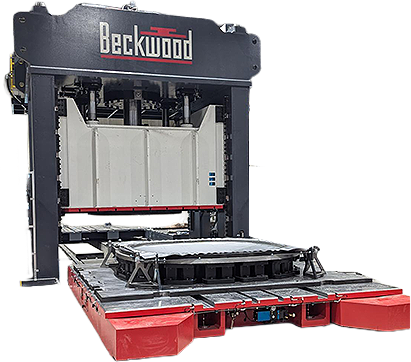
Trolley Systems & Ergonomic Part Handling
For large and heavy components, Beckwood bulge forming systems can be equipped with integrated trolley systems to support safe and ergonomic loading and unloading of parts and tooling. These systems are designed to work in conjunction with overhead cranes or lifting devices, allowing parts to be transferred smoothly into and out of the press without manual handling. Trolley-based solutions improve operator safety, reduce cycle time, and support repeatable positioning of large components, particularly in tank head and high-pressure bulge forming applications.
Bulge Forming FAQ
What types of parts are commonly produced using bulge forming?
Typical parts include tank heads, domes, rupture discs, tubes, canisters, and aerospace engine components requiring uniform wall thickness and seamless construction.
What is the difference between pneumatic and hydro bulge forming?
Pneumatic bulge forming uses air and is often used for spherical or domed parts. Hydro bulge forming uses water or fluid and is selected for cylindrical shapes or applications requiring higher forming pressures.
How much force does a bulge forming press require?
Required tonnage depends on internal forming pressure, part diameter, and sealing area. Bulge forming presses commonly exceed 2,000 tons, and high-pressure systems require exceptionally rigid structures.
Can bulge forming presses be customized for specific applications?
Yes. Bulge forming presses are highly application-specific and are engineered around part geometry, pressure requirements, tooling design, and production volume.
What industries use bulge forming presses?
Bulge forming is commonly used in aerospace, defense, energy, automotive, and industrial manufacturing environments.