
METAL
STAMPING PRESSES
Home / Press Applications / Stamping
What Makes A Metal Stamping Press Different?
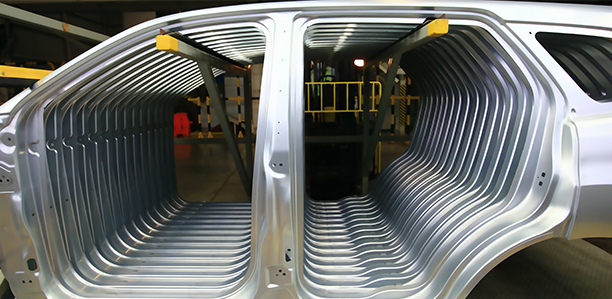
Stamping is a sheet metal forming process used to cut, form, or shape flat sheet material using matched tooling and controlled force. The process is commonly applied to aluminum, steel, stainless steel, copper alloys, and specialty materials where dimensional accuracy, repeatability, and production efficiency are critical. Stamping supports high-speed, high-volume manufacturing as well as lower-volume precision forming depending on part complexity and tooling strategy. It is widely used across aerospace, defense, automotive, appliances, medical, energy, and industrial manufacturing applications.
Custom Stamping Press Design & Engineering
Stamping press design is driven by part geometry, material type, tooling configuration, and required production rates. These considerations influence press tonnage, bed size, stroke, speed, and overall system configuration.
Part Geometry & Feature Complexity
Part size, thickness, and feature complexity—including bends, embosses, coining features, and cutouts—directly impact tonnage requirements and press selection. More complex geometries may require multiple forming operations within a single die or across multiple stations.
Tooling Type & Die Configuration
Stamping can be performed using single-hit dies, progressive dies, transfer dies, or compound dies. Tooling configuration influences press stroke length, shut height, bed size, and feed system requirements. High-impact operations such as blanking and piercing may also require shock or energy management solutions to reduce breakthrough forces, vibration, and tooling wear.
Tonnage & Load Distribution
Required press tonnage is determined by material type, thickness, perimeter length, and forming severity. In addition to total tonnage, load distribution across the bed and ram must be considered, particularly for tooling that produces asymmetric or off-center loading. Uneven load conditions can influence press frame design, guidance systems, and allowable working area to ensure alignment, tooling protection, and long-term reliability.
Stroke, Speed & Motion Control
Production rate requirements influence press speed and stroke profile. Certain forming operations may require slower forming speeds or controlled dwell to maintain part quality and tooling life. Higher volume stamping applications may be better suited for a mechanical press compared to a hydraulic or servo-electric press.
Feeding, Handling & Automation
Stamping operations often rely on coil feeds, straighteners, transfer systems, or robotic handling. Material feeding accuracy and synchronization with press motion are critical to maintaining part quality and uptime.
Die Change & Production Flexibility
Changeover time and die handling requirements impact overall equipment effectiveness. Quick-die-change systems and standardized die interfaces are commonly used to improve productivity in multi-part environments.
Beckwood Sheet Metal Stamping Solutions
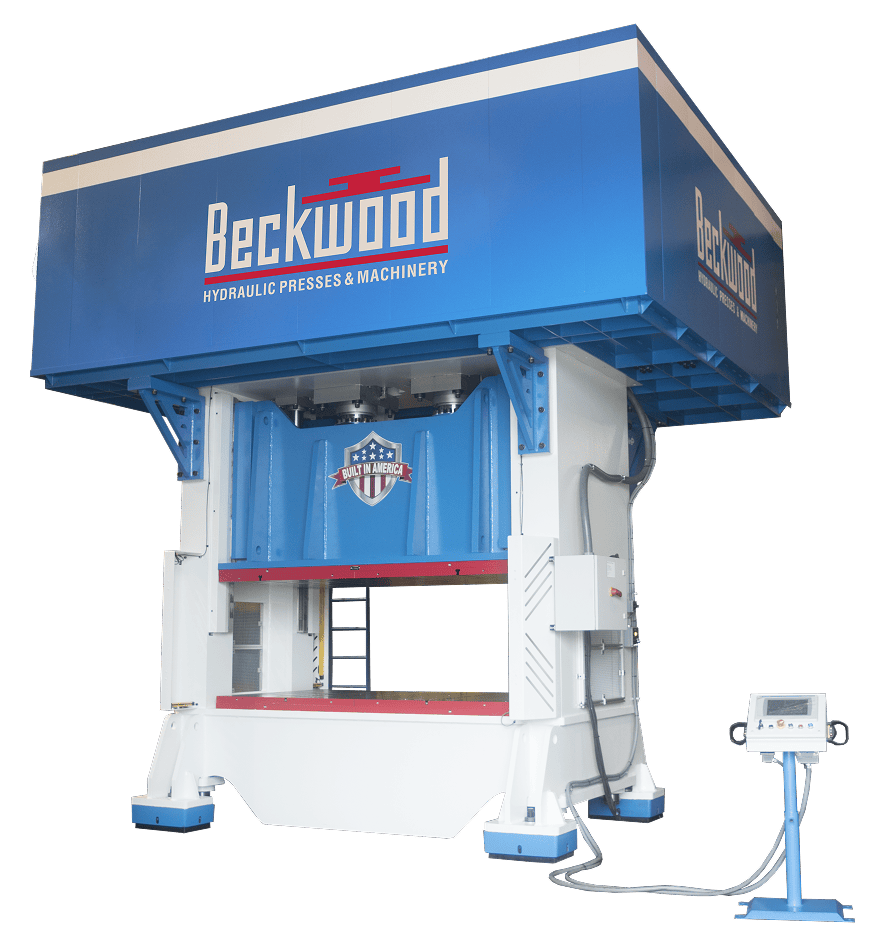
Beckwood engineers and manufactures custom hydraulic and servo-electric stamping presses designed to support a wide range of stamping operations and production environments. Capabilities include:
Hydraulic Stamping Presses
Hydraulic presses offer full tonnage throughout the stroke and precise control of force, speed, and dwell. They are well suited for forming, coining, embossing, and applications requiring flexibility or variable stroke profiles.
Servo-Electric Stamping Presses
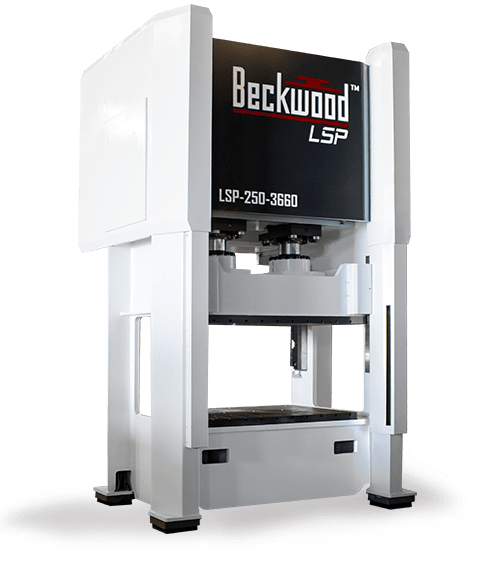
Servo-electric press technology is ideal for ultimate flexibility and precision when it comes to stamping motion profiles for applications requiring less than 500 tons. Learn more about the benefits of servo-electric press technology.
Advanced Controls & Automation
Press controls support step-by-step programmable stroke profiles, variable speeds, dwell positions, and recipe-based part setups to improve consistency and reduce setup time. Stamping presses can be integrated with coil feeding systems, transfer mechanisms, robotic handling, and downstream operations to support fully automated production lines.
Rigid Frame Construction & Shock Management
Rigid press structures and precision guidance systems designed to maintain alignment under full and off-center loading, with optional shock-absorbing features for high-impact stamping operations to reduce vibration and tooling wear.
Stamping Press FAQ
What materials are commonly stamped?
Stamping is commonly used with aluminum, carbon steel, stainless steel, copper alloys, and specialty materials depending on application requirements.
Is a hydraulic, servo-electric, or mechanical press the right fit for my application?
Hydraulic presses are often preferred for forming, coining, and applications requiring full tonnage throughout the stroke, variable speed, or dwell. They provide excellent control and flexibility for complex or lower-volume stamping operations.
Servo-electric presses are well suited for both low and high-volume applications requiring precise motion control, repeatability, and energy efficiency. They offer programmable stroke profiles and clean operation, making them ideal for precision stamping environments.
Mechanical presses are typically selected for very high-speed, high-volume blanking or stamping where fixed stroke and maximum throughput are the primary drivers.
Can stamping presses be automated?
Yes. Stamping presses are frequently integrated with coil feeds, straighteners, transfer systems, and robotic handling to support automated production.
What industries use stamping presses?
Beckwood stamping press systems are used across aerospace, defense, automotive, appliances, medical, energy, and industrial manufacturing applications.
Can Beckwood customize a stamping press for my application?
Yes. Beckwood specializes in custom-engineered stamping press solutions tailored to specific materials, tooling, production volumes, and facility requirements.